






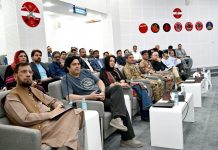



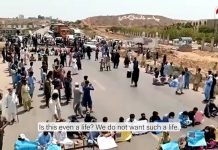
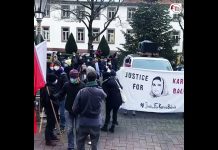



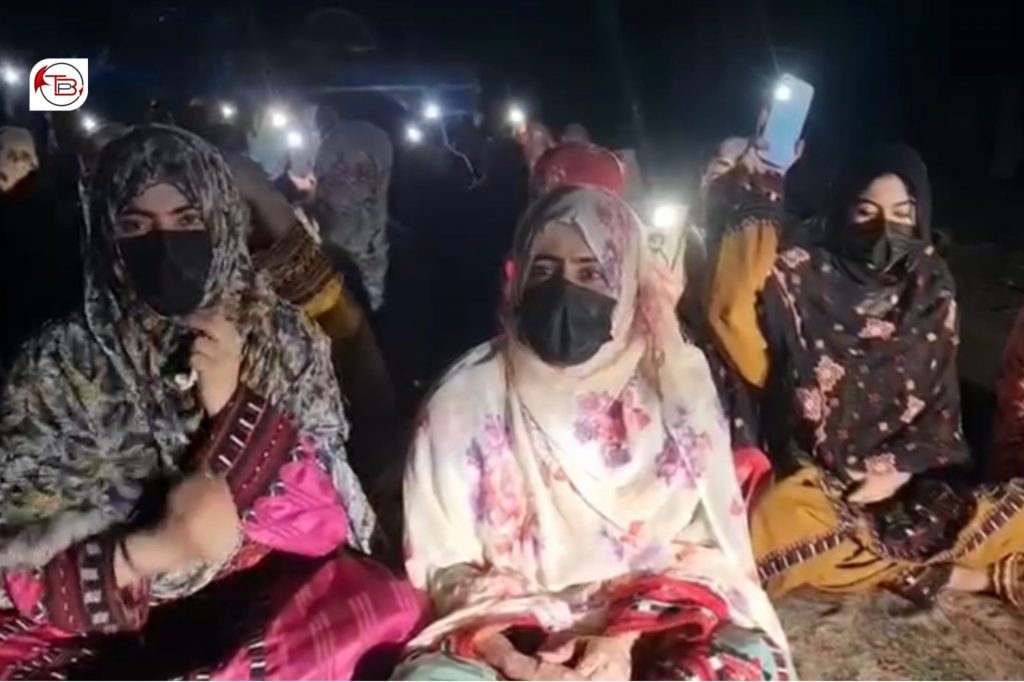
The Balochistan National Party (Mengal) staged a protest in Turbat on Thursday against the killing of Baloch Yakjehti Committee (BYC) activist Zeeshan Zaheer and the ongoing surge in enforced disappearances and fabricated cases against Baloch political workers.
The demonstration was attended by women, youth, lawyers, and local residents, along with leaders from both the BNP and the BYC.
The protest came as families of detained BYC leaders continued a sit-in outside Quetta’s Civil Lines Police Station, demanding visitation rights. The leaders have been in custody for over three months under Section 3 of the Maintenance of Public Order (MPO), facing terrorism-related allegations.
Earlier this week, the detainees were presented before an anti-terrorism court in Quetta, which granted a further 10-day physical remand. Following the hearing, they were transferred from Hudda Jail to the Civil Lines Police Station.
More than 48 hours after the transfer, their families and legal representatives have still not been allowed to meet them.
Local sources said the police station remains sealed off, with both media and members of the public barred from approaching. Human rights groups and political parties have expressed alarm over the situation.
The BYC voiced fears that its leaders may be subjected to torture in custody. The group called the denial of visitation rights unlawful and said it deepens public mistrust in state institutions.
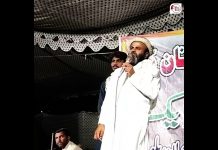
Addressing the protest in Turbat, BNP Central Committee member Dr Ghafoor Baloch said that political repression, enforced disappearances, and fabricated charges are unconstitutional and have deepened the crisis in Balochistan.
“If the state continues to silence dissenting voices, it will undermine its own legitimacy,” he warned.
BYC Kech leader Syed Bibi Baloch alleged that Zeeshan Zaheer was killed by state-backed death squads.
“Zeeshan was a peaceful activist and a vocal critic of enforced disappearances,” she said. “He was targeted because he refused to remain silent.”
BNP Kech’s acting president, Haji Abdul Aziz Baloch, said the state’s policies had “politically and socially paralysed” Baloch society.
“Denying the right to life, criminalizing political thought, and marginalizing the oppressed—this is state terrorism,” he said.
Speaking at the event, Makuran Bar Association member Naseer Ahmed Gichki accused the Pakistan People’s Party of enabling rights violations in Balochistan. He said the party, backed by undemocratic forces, had allowed grave abuses to continue unchecked.
Makuran Bar Association President Advocate Mehrab Gichki added that the legal community stands in full solidarity with the BNP and BYC in their struggle for constitutional rights.
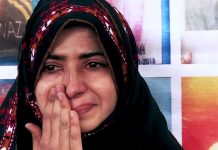
Meanwhile, Zeeshan Zaheer’s sister, Adbiya Baloch, called his death a “deep and irreparable loss.” Speaking to local media in Panjgur, she said: “After our father, the shadow of our brother has also been lifted from over our heads.”
“This grief is indescribable,” she added. “But as a sister, my heart finds peace in the fact that my brother gave his life for the path of truth. He prevailed with honour, and we will always be proud of our Zeeshan. A martyr is alive.”