





















At least 17 Afghan migrants, including women and children, have reportedly died from severe dehydration while attempting to cross a remote border area near Saravan in western (Iran-administered) Balochistan.
Haalvsh, a news outlet covering the region, said the migrants died after running out of water in the Mak-Sukhteh area along the Rotak border.
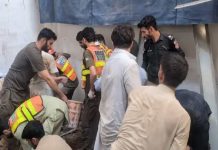
The bodies were recovered and transferred to a morgue in Khash after the mortuary in Saravan was unable to accommodate them due to a lack of space, according to the report.
Among those who died were five members of a family from Afghanistan’s Baghlan province, including a 45-year-old mother and her four daughters, aged between 14 and 22.
The reported deaths come as Afghanistan, Iran and the United Nations prepare to hold a trilateral meeting in Kabul to discuss the situation facing Afghan refugees and migrants in Iran.
Arafat Jamal, the United Nations refugee agency’s representative in Afghanistan, recently said an agreement had been reached with Iran to hold the meeting in the near future. The discussions are expected to address the challenges facing Afghan refugees and migrants, including forced deportations.
Legal affairs analyst Khalil-Ahmad Nadim described the deaths as deeply distressing, saying the Afghan authorities had a responsibility to create employment opportunities and conditions that would allow people to build sustainable lives inside the country.
He also cautioned against placing the entire responsibility on neighbouring countries, while calling on Iran to consider the humanitarian dimensions of the situation.
Afghans continue to travel towards Iran through unofficial routes despite repeated reports of deaths along the journey. Many of the routes pass through remote and inhospitable terrain, exposing migrants to extreme temperatures, dehydration, hunger and other life-threatening conditions.
Economic hardship, unemployment and limited opportunities inside Afghanistan remain among the main factors driving people to undertake the dangerous crossings in search of work and better living conditions.