
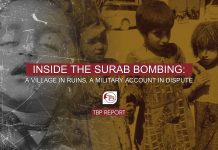


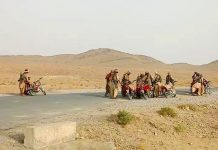
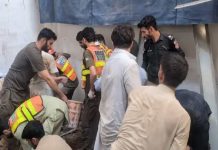

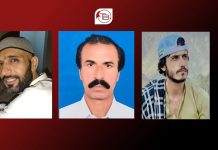
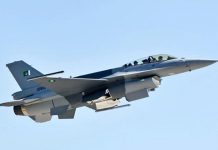
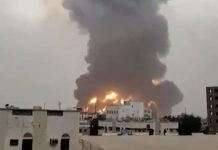
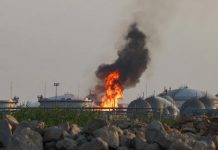
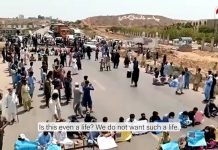
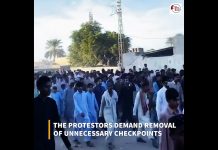


On the morning of 12 August, several people were killed and injured as a result of bombing by Pakistani fighter jets in the Gidar Goandhan area of Surab district, Balochistan. Unverified public sources put the number of dead and injured at twenty-seven. In protest against the incident, the victims’ families staged a sit-in on the Quetta-Karachi highway with the bodies of the deceased. The incident has also drawn strong condemnation from Baloch nationalist parties and human rights organisations.
According to details released by the Medical Superintendent of DHQ Surab, six bodies were brought to the hospital following the incident, including women and children. The deceased were reported to be between two and fifty years of age. Hospital authorities stated that sixteen injured individuals were also brought in, most of them women and children, aged between one and forty years. On the other hand, local sources claim that some bodies were taken into custody by military personnel and removed from the area, as a result of which several bodies could not be transferred to the hospital and complete details regarding their number and identities have not emerged. According to the sources, some individuals remain missing following the incident. However, it remains unclear whether they are trapped beneath the rubble or whether their remains could not be recovered due to the intensity of the explosion.
The Surab incident is not the first of its kind. In the past, civilians have also been affected and killed in operations involving Pakistani fighter jets and gunship helicopters in Balochistan. International media does not have free access to Balochistan, while local journalists work in an environment of state pressure. In such circumstances, independent reporting on military operations and incidents involving civilian casualties becomes almost impossible. Subsequently, a particular narrative emerges through state institutions and the Pakistani media, while the testimonies of affected people and realities on the ground present a different picture.
The Surab incident is not a state mistake or merely the tragic outcome of a military operation. It is another bloody manifestation of the same occupying system that has, for decades, sought to keep Balochistan’s political authority, resources and public voice under its control. Islamabad may claim to govern Balochistan, but the use of force alone does not create moral or political legitimacy for such rule. Through the roar of warplanes, the destruction of homes, the killing of civilians, enforced disappearances and fear, the people of a land may be subdued, but the question of their freedom cannot be erased.