



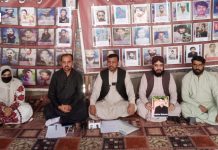
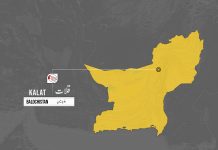
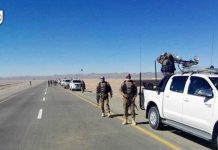
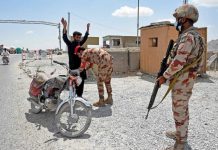

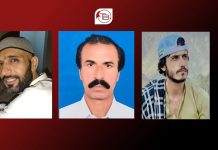
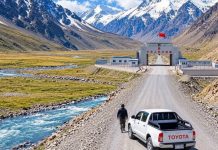
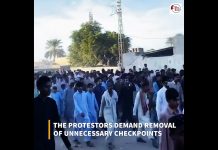


Balochistan’s Mastung district, particularly Khadkocha tehsil, has remained under severe tension for the past week. A large-scale military operation is underway in the area, while an indefinite curfew has been imposed in Khadkocha. During this period, several cases of enforced disappearance involving women, children and young people have also been reported, creating an atmosphere of profound fear among the local population.
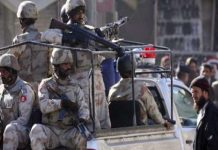
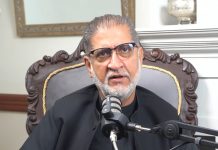
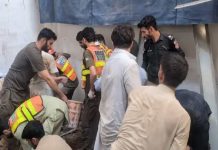
On 16 July, the Baloch Liberation Army (BLA) targeted a large Pakistani military convoy in Khadkocha. In a statement, the group said the convoy was travelling from Quetta towards Panjgur and claimed that at least 62 personnel were killed in the attack. Government authorities, however, have issued no detailed account either confirming or denying the BLA’s claim. The attack was immediately followed by a large-scale military operation in the area. Reports from Khadkocha indicate that civilian settlements, residential areas, mosques and madrassas have also been affected by the operation, while the complete curfew has confined residents to their homes and brought everyday life to a standstill. The situation has drawn concern from political and social figures across Balochistan. Former Balochistan chief minister Nawab Aslam Raisani and other political leaders have condemned the curfew and called on the government to lift it immediately, restore freedom of movement and adopt a political approach instead of subjecting the local population to collective punishment.
This is not the first time such measures have been imposed in Balochistan. In recent months and years, prolonged curfews have also been enforced in several areas, including Zehri in Khuzdar district, Noshki and the coastal town of Jiwani, depriving residents of livelihoods, education, healthcare and other basic necessities of daily life. These recurring measures have further strengthened the belief among the people of Balochistan that the state’s harsh policies are not resolving their difficulties but deepening them. The perception is also steadily growing in public and political circles that policies based on force and continued military operations are widening the gulf of mistrust between the state and the people. When an entire area is sealed through curfews, blockades and large-scale military operations, the consequences are not limited to the duration of the restrictions. Their social, economic and psychological effects continue to be felt long afterwards.
The state, meanwhile, has maintained that those engaged in armed resistance in Balochistan are limited in number and consist of only a few hundred individuals. If that claim is accurate, then the scale of the military operations, the length of the curfews, the severity of movement restrictions and the deployment of large numbers of personnel stand in clear contradiction to it. The question therefore remains: if the resistance is limited, why are entire areas and their populations collectively subjected to such restrictions?
Balochistan is not merely a security or military issue. It is a political, historical and national question rooted in national rights, political representation and identity. Until a meaningful process is initiated to address these fundamental issues, conditions in Balochistan will remain unchanged, and the use of force is unlikely to produce any lasting result. If political engagement is not prioritised, the present situation will become even more serious. Curfews, military operations, enforced disappearances and harsh security measures cannot resolve the underlying political question. A sustainable basis for peace and stability can only be established by acknowledging Balochistan’s genuine political, social and national issues and initiating a meaningful process involving all relevant parties. Otherwise, the policy of force will only deepen the crisis and make conditions in Balochistan more grave.