































By Kachkol Ali, Human Rights Lawyer
Søster Mathildesgate Lørenskog Norway
The contemporary failure of the United Nations and its specialised agencies is not attributable to a lack of normative frameworks or legal instruments, but rather to the systematic abandonment of the fiduciary constitution of human rights and the absence of good-faith compliance by Member States with their international obligations. Human rights have increasingly been reduced to diplomatic rhetoric—selectively invoked, politically negotiated, and subordinated to power considerations—thereby hollowing out the moral authority and legal credibility of the international system.
Under modern international law, sovereignty is no longer absolute. It is conditional, grounded in the principle that state authority is exercised in trust for humanity. Human rights constitute binding fiduciary limits on power, particularly where the state invokes necessity, emergency, or national security. Yet the United Nations has failed to operationalise this fiduciary logic. Instead of enforcing accountability, it has often permitted sovereignty to be weaponised against human dignity, allowing political expediency and great-power preferences to eclipse legal obligation.
This institutional failure is compounded by the conduct of the UN Secretary-General, who, as the chief executive and moral custodian of the UN Charter, is mandated to act independently and in defence of the purposes and principles of the Organisation. In practice, however, this mandate has too often been discharged through cautious diplomacy aligned with the wishes of powerful states rather than principled enforcement of international law. This pattern of accommodation has gravely weakened the UN’s authority and has emboldened political actors who now openly ridicule international law and multilateral institutions.
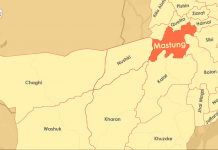
Pakistan represents a paradigmatic case of this global fiduciary collapse. In the name of national security and state interest, Pakistan has persistently breached the fiduciary constitution of human rights, particularly in Balochistan. Enforced disappearances, extrajudicial killings, arbitrary detention, and collective punishment of civilians—including women and children—have become routine. Fundamental rights and constitutional guarantees are systematically suspended where security forces are involved, rendering domestic substantive and procedural law ineffective. As a result, the criminal justice system has been hollowed out, and a deep-state structure operates beyond judicial scrutiny and democratic accountability.
This breach is not merely executive or administrative; it has been constitutionalised. The 27th Constitutional Amendment stands as a critical example of how constitutional form has been used to legitimise substantive injustice. Enacted under the guise of governance and national interest, the amendment entrenched security-centric authority and federal dominance while diluting political agency, representative consent, and local accountability in Balochistan.
From a fiduciary constitutional perspective, this reflects a profound inversion of constitutional purpose: the Constitution, rather than restraining power in trust for the people, has been instrumentalised to consolidate domination. When constitutional amendments themselves function as tools of control, fiduciary failure becomes structural and deliberate.
Pakistan’s conduct further violates binding international legal standards, including the UN Basic Principles and Guidelines on the Right to a Remedy and Reparation for Victims of Gross Violations of International Human Rights Law and Serious Violations of International Humanitarian Law (2005), which impose an obligation to investigate, prosecute, and punish those responsible for grave abuses. Pakistan is also in flagrant breach of the Responsibility to Protect (R2P) doctrine as affirmed in the 2005 World Summit Outcome (General Assembly Resolution 60/1, paras. 138–139), having manifestly failed to protect its population from serious human rights violations.
Under international law, where a state is unwilling or unable to fulfil these obligations, the responsibility shifts to the international community. Yet the failure of meaningful international response—culminating in Pakistan’s election to the United Nations Human Rights Council—exposes a deep normative contradiction and renders the Council’s credibility increasingly questionable. Membership without accountability transforms human rights mechanisms into instruments of legitimisation rather than protection.
Ultimately, the crisis confronting the United Nations is not one of law, but of legitimacy. Human rights cannot survive where fiduciary responsibility is abandoned, where law is negotiated rather than enforced, and where power is indulged at the expense of human dignity.
Until the UN and its Member States recommit to the fiduciary foundations of human rights—treating them as enforceable obligations rather than optional ideals—both international institutions and state sovereignty will continue to lose their moral and legal authority.
Disclaimer: The views and opinions expressed in this article are those of the author and do not necessarily reflect the official policy or position of The Balochistan Post or any of its editors.