





















By Maha Ali
We call ourselves free, but what is freedom? When a student cannot walk safely in the country, when a mother fears for her child every second, when education is not something naturally given but something demande. What is independence when our lives are not safe? This is a “live-streamed genocide,” and no one has the privilege to say they are not aware of it.
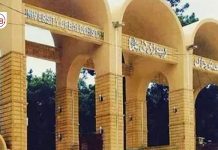
In Pakistan, educational institutions are abduction institutions. They are places where 19–20-year-old children from Balochistan are forcibly disappeared. Saeed and Feroz are the biggest examples of this institutional failure. Violence and brutality are very normal human behaviors in today’s world. Violence has many faces, but state violence has one face: abduction or dumping dead bodies. For now, Saeed’s abduction has impacted every Baloch student on all campuses, especially at Quaid-e-Azam University. We know the truth: no female or male student is safe anymore, but we still hope for justice someday.
Saeed and Feroz are kneeling, surely beaten from top to toe beneath state torture cells. Saeed, a student of the Defence and Strategic Studies (DSS) department, was abducted on July 8, 2025. He was taken by unidentified individuals in civilian attire at approximately 7:30 p.m. from the Islamabad toll plaza. Saeed and a friend were traveling to Quetta by public bus when the abduction occurred. Law enforcement officials were present during the incident. The abductors removed the two from the bus, inspected their identification and belongings, and then instructed Saeed’s friend to reboard the bus. Saeed was forcibly thrown into a car.
Similarly, we still remember the day Feroz was forcibly disappeared on May 11, 2022. A student of BS Education at Arid Agricultural University Rawalpindi, he, like many others, was just a student—attending classes and studying hard. Then, he was abducted. His whereabouts remain unknown. Three years have passed—an incredibly long time for his mother and others in this situation. It is as if time froze. The disappearances of young Baloch students leave families carrying the weight of the world, trying to make a better life for themselves, but fear is always lurking.
When university facilities and state violence enter the classroom, the future walks out. Students’ degrees are not rewarded; they are murdered now. Institutions persist in harassing and blaming students, but the question remains: have they ever examined their own system? How can institutions expect students to study when they are subjected to constant harassment? They are given lectures and theories, yet expected to be motivated. Motivated for what? To be mentally prepared for abduction?
Saeed and Feroz are not dead, and that is what hurts the most, because we cannot see them in pain. Yesterday, they were with us, laughing and breathing. Today, they are gone, and no one knows where. Enforced disappearances are crueler than death because death offers closure, while this leaves only uncertainty.
Deep down, we all know what is happening and why it is happening. We all understand the dynamics of power and privilege, yet we often choose inaction because it does not directly affect us, at least, not yet. But how long can we afford to remain indifferent? The truth is, it only takes a moment of courage to shed our cowardice and stand on the right side of history. The state’s handmaiden ideology, which undermines Baloch identity, is a constant reminder of our fate, dictating whether we find education or are condemned to the state’s torture cells. For countless Baloch students, this is not just a warning; it is a painful reality.
Students are confined, and it is suffocating. For every student, every step feels like a risk, every breath a prayer. Saeed and Feroz are just two names we know, but there are countless others. The system is flawed, and students are paying the ultimate price. We keep hoping for justice, but it feels like a distant dream. What future awaits when our lives are not safe?
If Saeed and Feroz are not released, then educational institutions will have failed in their fundamental purpose. International organizations must either close these institutions or hold them accountable, as their current state is deeply disgraceful.
Disclaimer: The views and opinions expressed in this article are those of the author and do not necessarily reflect the official policy or position of The Balochistan Post or any of its editors.