






The Baloch Yakjehti Committee (BYC) has said the Baloch nation is facing a “systematic genocide” carried out under state patronage, calling on the international community to take urgent notice of what it described as violations of human rights and United Nations laws.
In a pamphlet, the group said every human being is born with the right to life and that denying a nation this right on the basis of nationality, language, religion or identity falls within the definition of genocide.
The BYC said genocide was “not a single incident but an organised policy” aimed at eliminating a nation in whole or in part. Citing the United Nations definition, the pamphlet said genocide includes acts intended to destroy national, ethnic or religious groups.
‘Mass killings, torture and economic blockade amount to genocide’
The BYC said what it described as full genocide includes mass killings, severe physical and psychological torture, economic blockades, famine, denial of medical care, forced sterilization and the forcible transfer of the next generation to other groups.
Partial genocide, it said, includes targeting students, intellectuals, political activists and women, as well as enforced disappearances and the erasure of language and culture.
The pamphlet said the presence of an armed conflict in Balochistan “in no way grants the state of Pakistan the right to commit genocide.”
It cited daily incidents of targeted killings, mutilated bodies recovered after abductions, mass graves, enforced disappearances and custodial torture as evidence that, it said, falls within the category of mass killing.
It added that house raids, humiliation at checkpoints, denial of employment opportunities, restrictions on border trade, seizure of agricultural land and forced displacement had taken the form of economic genocide, contributing to rising poverty and food insecurity.
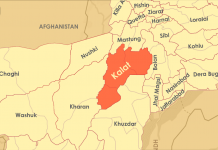
The pamphlet also warned of environmental and health devastation. It said failed uranium enrichment in Koh-e-Sulaiman, nuclear activities in Khuzdar and nuclear tests in Chagai and Kharan had caused a surge in cancer, skin, blood and thyroid diseases, while the absence of basic healthcare resulted in thousands of preventable deaths each year — a “silent but deadly form of genocide.”
‘Balochistan without Baloch’
The BYC said that because the Baloch nation was facing genocide, it carried a dual responsibility: to protect its people and to systematically collect and present evidence of these acts to the world.
It said the objective of state policy was “Balochistan without Baloch,” aimed at enabling external powers to exploit land and resources.
The pamphlet urged the Baloch people to reject participation in “state-backed death squads,” the Counter Terrorism Department, the Frontier Corps or the military, and to distance themselves from drugs, tribal conflicts and social decay.
It called on the Baloch people to preserve their language, culture and national consciousness and to document every act of oppression “to awaken the global conscience.”
The BYC said the struggle was not limited to one day or one generation, describing it as a question of the Baloch nation’s survival. “If negligence is shown today, future generations will pay a heavy price,” the pamphlet said.