

















Months and years continue to pass in Balochistan, yet instead of any improvement in the prevailing conditions, serious problems are steadily worsening. The year 2025 witnessed an increase in enforced disappearances, an escalation of state repression, and further restrictions on political activists. Despite the Pakistan Peoples Party–led government failing to present solid legal justification for the arrest and continued detention of Baloch political leaders, the courts in Balochistan have remained unable to secure their release.
The practice of forcibly disappearing students, political activists, and relatives of individuals associated with the Baloch resistance continues, and the trend of enforced disappearances of women has now increased in Balochistan. In 2025, more than ten women were subjected to enforced disappearance, and eight women remain missing to date. The writ of the state in Balochistan has been reduced to urban areas and cantonments, and under the pretext of restoring its authority, the government is intensifying state repression in the region—of which Baloch women are increasingly becoming the targets.
While Balochistan remained engulfed in political crises throughout 2025, official figures also indicate a record increase in attacks on civilians, police, and security forces, including the Frontier Corps. Suicide attacks, bomb explosions, and targeted killings claimed the lives of 443 people, including 202 army officers and personnel. For the Jaffar Express service, 2025 proved to be an extremely difficult year, marked by repeated bomb blasts, damage to bridges, and the hijacking of the Peshawar-bound train on March 11—the deadliest incident of the year. In the final month of the year, the attack on the Nokundi Frontier Corps camp is also expected to have highly negative impacts on mining projects of China and Barrick Gold in Balochistan.
In 2025, armed organizations fighting for independence across Balochistan—the Baloch Liberation Army, Balochistan Liberation Front, and Baloch Republican Guards—intensified their attacks, with a continuing trend of large-scale operations.
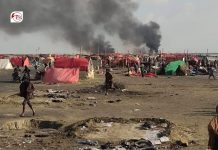
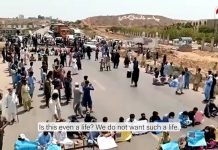
There are no signs of a reduction in Balochistan’s grave problems in 2026. At the end of 2025, employees of the Balochistan Grand Alliance are continuing their pen-down strike, families of forcibly disappeared women in Kech district are holding a sit-in on the CPEC highway for their recovery, and political struggle against state repression remains ongoing. The intensification of attacks by Baloch armed groups is causing damage to state interests. Given these severe issues and the war-like conditions prevailing in Balochistan, it is not difficult to conclude that the situation will remain dire in the new year as well.