



















By Yaran Diyar
As the Voice for Baloch Missing Persons (VBMP) completes six thousand days of continuous protest in Quetta, its small camp once again draws national attention to one of Pakistan’s longest and least resolved human rights concerns. For nearly sixteen years, families of the missing have gathered outside the Quetta Press Club, holding photographs, paperwork, and the fading hope that their relatives will one day return.
The milestone comes two years after VBMP marked five thousand days of protest. Even then, the organisation described its struggle as a long and exhausting effort conducted through peaceful means. Statements issued at that time recalled the growing list of families who travelled from remote districts of Balochistan to stand with the organisation’s leadership, including Chairman Nasrullah Baloch and Vice-Chair Mama Qadeer Baloch. Many described the passage of years without official acknowledgement of detentions, a lack of legal clarity, and the emotional burden of not knowing the fate of their loved ones.
4000 Days Of Protest: What Did Balochistan Achieve? Part 1
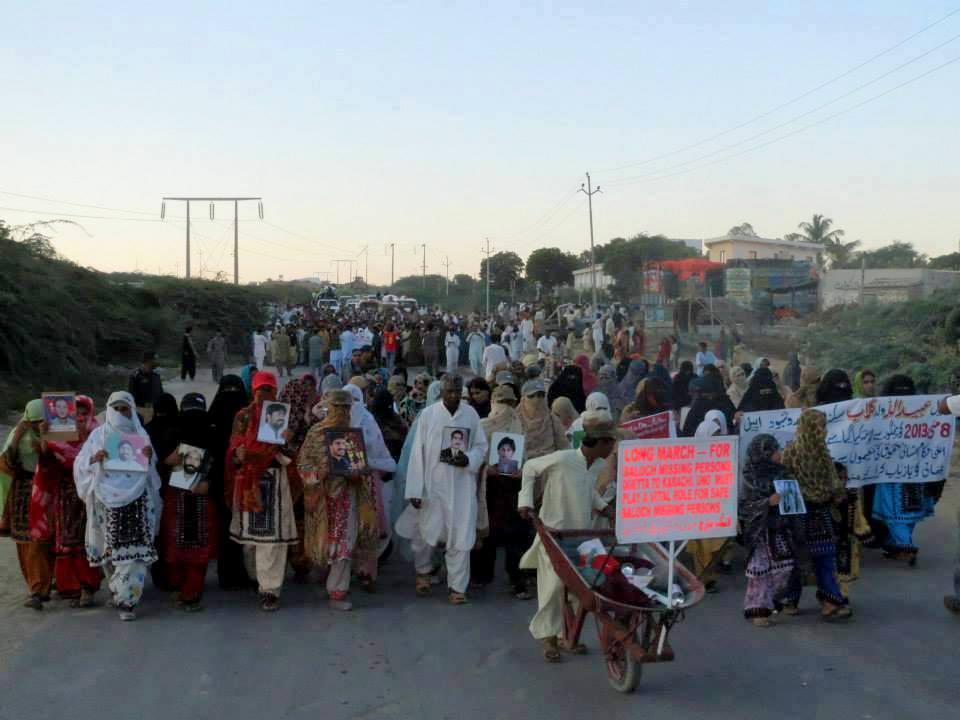
Since then, VBMP’s movement has expanded far beyond the boundaries of its protest camp. One of the most significant episodes was the long march from Quetta to Islamabad, a journey of hundreds of kilometres that carried families across harsh terrain and into the heart of the federal capital. The march sought to bring national visibility to enforced disappearances and to directly petition state institutions. It became a defining symbol of the movement’s endurance and the persistence of the families involved.
In its latest statement marking six thousand days, VBMP says that little has changed in practice. According to the group, complaints and testimonies submitted to commissions and courts have not produced consistent accountability. It claims that families continue to face procedural obstacles, prolonged uncertainty, and, in some cases, pressure or intimidation. VBMP also points to the use of legal provisions, including counterterrorism laws, against its activists, arguing that such measures complicate civic efforts to seek information about detainees.
4000 Days Of Protest: What Did Balochistan Achieve? Part 2
Human rights organisations in Pakistan and abroad have long highlighted disappearances in Balochistan as a serious and unresolved issue. Reports over the years have described a climate in which weak institutional oversight, political volatility, and broad security mandates can contribute to situations where individuals are detained without disclosure. VBMP argues that without transparent mechanisms, independent investigations, and clear legal processes, families have little recourse beyond sustained public protest.

Despite these challenges, the protest camp has remained non-violent and open to all visitors. It continues to be a place where families meet journalists, lawyers, activists, and observers, and where new cases are documented. Many who join the camp do so after years of searching through police stations, hospitals, checkpoints, and administrative offices. Their presence, often quiet and patient, forms the core of VBMP’s legitimacy and resilience.
Four Thousand Days of Protest: What Did Balochistan Achieve? Part 3
The completion of six thousand days does not mark the end of this struggle but rather a reminder of how long it has endured. For VBMP, the hope remains that persistence will eventually bring clarity to unresolved cases and establish safeguards that prevent future disappearances. Whether or not these aspirations are realised soon, the movement has already carved a place in Pakistan’s civic landscape as one of its longest and most determined campaigns for answers.