







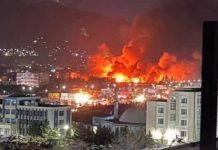


A sweeping military operation in Zehri tehsil of Khuzdar district has entered its third week, with local residents reporting widespread destruction, detentions, and civilian deaths. The offensive, which began in mid-September and escalated late last month when a large contingent of forces entered into the town, has combined ground advances with aerial and drone strikes while leaving the area cut off under a communications blackout.
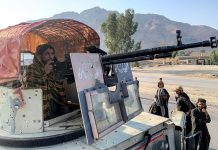
Local residents and sources who spoke to The Balochistan Post described a campaign involving tanks, mortar and artillery fire, and repeated drone strikes. Security forces reportedly pushed into Zehri and nearby areas on 27 September and again in early October, sealing roads in and out of the town, imposing a three-day curfew, and restricting access to food, fuel, and medical care.
Witnesses said mortar fire and shelling damaged houses and agricultural fields, destroying ripe cotton crops ready for harvest and threatening the livelihoods of farmers who rely on seasonal sales to markets such as Karachi. Water supplies and solar power systems were also destroyed, leaving families without basic services.
Shelling and gunfire were reported in Kochav, Chashma, Dandar, and Morinki. Witnesses said cotton fields in Kochav were burned, while mortar rounds struck homes in Chashma and surrounding villages. Local accounts described “widespread fear” among the civilian population, with many families displaced. The markets have been shut down and the locals are “trapped” into their houses, unable to leave due to the fear of being targeted by the drones flying overhead.
During the advances, security forces detained dozens of residents and transferred them to undisclosed locations, according to local sources. Raids on homes were reported to involve violence against women, children, and older people. Officials imposed a three-day curfew and closed the main access routes to the town, leaving civilians effectively besieged and obstructing relief or medical evacuations.
Drone Strikes and Civilian Deaths
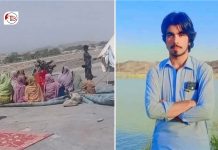
The offensive has included multiple drone strikes. On 15 September, an air strike on a house reportedly killed three members of the Pandrani tribe. On 17 September, a drone strike near Tarasani killed three people, including two women, and wounded five others. The dead were identified as 40-year-old Bibi Amna (wife of Sanaullah), 41-year-old Laal Bibi (wife of Ali Akbar), and 30-year-old Mohammad Hasan (s/o Mohammad).
The wounded were identified as 45-year-old Sanaullah s/o Ghulam Rasul, Ali Akbar s/o Abdul Hakim, 38-year-old Abdul Nabi s/o Mohammad Yaqub, 4-year-old Umair Ahmad s/o Ghulam Rasul, and 65-year-old Mola Bakhsh s/o Mandao. Local sources said Sanaullah was in critical condition and had been referred to hospitals in Quetta, but his ambulance was stopped for several hours at the Anjira FC checkpoint before he was taken to Khuzdar Cantt. His condition and whereabouts remain unknown.
On 1 October, a drone strike in the Norgama area reportedly killed four people sitting by their cotton fields. Local accounts compiled by
Local reports obtained by The Balochistan Post estimate that roughly eleven people have been killed in drone strikes since mid-September, including a shepherd and a student, with many more injured. Due to communications restrictions, those figures and victim identities could not be independently verified.
Background and Escalation
The current operation follows a gradual presence of Baloch pro-independence armed groups in Zehri over the past year and a half. Local sources said that after 11 August, the groups had fully established control of the town. The Baloch Raaj Aajoi Sangar (BRAS), an umbrella organization of Baloch armed groups, claimed responsibility for an attack on security forces that had been sent to dislodge the Baloch “pro-independence” groups from Zehri. The forces were ambushed at several points, leaving 37 dead. Their weapons and rations were confiscated and vehicles were destroyed.
In the early days of the current military operation, local sources reported a Baloch Liberation Army (BLA) attack near Anjira that killed around 15 security personnel. Officials said those clashes prompted intensified aerial strikes and a broader push into Zehri, which is still ongoing.
Pakistani military sources confirmed continuing air and ground operations, saying the offensive targets armed fighters. They asserted that several “militants” had been killed and others detained, and that hideouts were destroyed, but provided no detailed casualty figures or identities.
The BLA and other groups present in the area have not confirmed casualties to independent media. Armed groups have instead circulated videos and photographs of their presence, suggesting the military has so far been unable to push them out of Zehri.
Communications Blackout and Humanitarian Concerns
A media and internet shutdown in Zehri – including suspension of mobile and broadband services and sealed ground routes – has made independent verification of casualty figures, arrests, and the scale of destruction difficult, according to local sources and journalists. Many families are reported to have fled their homes or been forced out, while humanitarian needs such as food, water, medicine, and shelter remain unmet.
The Baloch Yakjehti Committee (BYC) issued a statement condemning what it described as “systematic targeting of civilians” during the operation. Its central spokesperson said bombardment and shelling had killed civilians, including two elderly women, and left families homeless and traumatized. The statement accused forces of deliberately destroying homes, crops, water sources, and solar systems, placing the survival of local people at risk.
BYC said the entire area had been placed under siege with food, water, and medical supplies blocked and hospitals left without doctors or treatment facilities. The group alleged that raids on homes involved “severe violence” against women, children, and the elderly, describing the events as “organized human rights violations and war crimes.”
The group demanded the immediate restoration of electricity, food, medical services, and communications; an end to attacks on civilians and civilian property; free access for media, human rights observers, and aid organizations; and transparent investigations into alleged war crimes. It called on the United Nations, human rights groups, and humanitarian agencies to intervene urgently to protect civilians.
Verification Challenges
Sources who spoke with The Balochistan Post said the true scale of casualties on both sides remains unclear. While the military has acknowledged ongoing clashes and arrests, it has not provided figures. Local reporting indicates both fighters and civilians have been killed in strikes and ground fighting, but independent confirmation is impossible under current restrictions and lack of access to the area.