












By Sayad Hasil
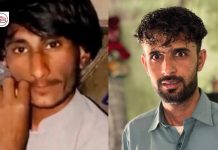
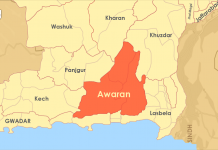
In the dusty village of Nasirabad, Turbat, a boy named Nizar Jan was born in 1997 to Abdul Ghani and Zarina. He was their first son, followed by three more boys and a daughter. His childhood, unlike many others in his village, was marked not by games or laughter, but by hunger, hardship, and silence.
Nizar’s father, Abdul Ghani, had once worn the uniform of the Bahrain Police. But when the war between Iraq and Kuwait erupted on 2 August 1990, fear gripped him. He left his job, afraid that conflict would spread across the Gulf. He returned to his homeland in Balochistan, never imagining that the true war that would one day claim his son’s life was waiting for him at home.
By 2007, floods caused by heavy monsoon rains forced much of the population to migrate. But Ghani, too poor to resettle in Turbat city, remained behind. Poverty chained his family to their crumbling home in Nasirabad.
Nizar’s childhood disappeared under the weight of survival. He studied only up to the 10th class in his hometown. Beyond that, education was out of reach; Turbat had the schools, but Ghani could not afford the expenses. Desperate to give his son a chance, Ghani pleaded with relatives. He offered his child’s labor in exchange for shelter—“He will go to school in the morning, and in the evening he will do all your housework.” But the relatives refused, saying they had no space. The rejection crushed him, leaving young Nizar’s dreams stranded in silence.
With no way forward, Nizar began working in his uncle’s hotel in Nasirabad. His salary was a mere 2,000 rupees. From that, he would give 100 rupees each to his mother and sister, saving the rest to one day secure a visa for Qatar. His only dream was to escape poverty, to earn a better wage abroad, and perhaps live a life free of fear.
But fear surrounded him anyway. His town lived under constant tension. Some days the streets were patrolled by Sarmachars (Baloch insurgents). Other days, Pakistani security forces carried out raids, leaving behind arrests, blood, and silence. For Nizar, who was by nature quiet and reserved, the presence of armed men—whether rebels or state forces—made him shrink further into himself. He often froze when they entered the hotel, his face pale, his silence deeper.
Then, on May 29, 2025, as the sun dipped over Nasirabad’s main bazaar, his silence was broken forever. Two men on a motorcycle arrived outside his uncle’s hotel. Witnesses say they were suspected members of a state-backed Death Squad. Without a word, they fired at close range with an AK-47. Five bullets tore into Nizar’s body. He collapsed instantly, his life extinguished on the spot where he had once served tea and food to strangers.
The men who pulled the trigger did not know him. Perhaps even the one who gave the order never knew his home. But the state that hunts down young Baloch men does not need names. It sees them all as suspects, as sons of rebels, as potential voices of dissent. For the state, a poor hotel worker like Nizar was nothing more than another number, another silenced life.
Locals whispered the same explanation they give for every killing: collective punishment. When the state cannot find a rebel, it targets his relatives, neighbors, or anyone unlucky enough to share the same soil.
Nizar’s story is not just his own. It is one thread in the fabric of a wider tragedy—a systematic campaign of fear and erasure. A genocide, many call it. Families like his carry not only the grief of a murdered son but also the terror that their other children might be next.
For Abdul Ghani, who once feared war in Bahrain, the real war arrived decades later, silently, and stole the most valuable thing from him: his son.
Nizar Jan was not a fighter, not a politician, not even outspoken. He was a young man who worked in a small hotel, saved money for a future abroad, and spoke very little. But in a land where silence itself has become dangerous, his quiet life was ended by bullets, and his story buried by the state in silence.
Disclaimer: The views and opinions expressed in this article are those of the author and do not necessarily reflect the official policy or position of The Balochistan Post or any of its editors.