









At least 14 people were killed and 31 others injured on Tuesday in a powerful explosion at Shahwani Stadium in Quetta during a rally organised by the Balochistan National Party-Mengal (BNP-M) to mark the fourth death anniversary of veteran nationalist leader Sardar Attaullah Mengal.
According to officials, the blast occurred in the parking area shortly after the rally had concluded. Police said initial findings suggest it was a suicide attack, though investigations are still underway. The provincial government has ordered a high-level inquiry and formed a committee to determine the causes and identify those responsible. Security forces cordoned off the site and began collecting evidence immediately after the incident.
BNP-M central leader Sajid Tareen Advocate confirmed that 13 party workers were among the dead. He said the party had already expressed concerns about security and had alerted the district administration before the event. He also confirmed that former MPA Ahmed Nawaz and senior party figure Musa Baloch were among the injured.
Leaders and participants
The rally at Shahwani Stadium was attended by BNP-M chief Sardar Akhtar Mengal, Pashtunkhwa Milli Awami Party head Mehmood Khan Achakzai, Awami National Party’s provincial president Asghar Khan Achakzai, senior lawyer and activist Ali Ahmed Kurd, and other political and social leaders.
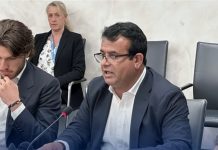
In his speech before the explosion, Akhtar Mengal paid tribute to Attaullah Mengal, saying that “the mountains, deserts and seas of Balochistan bear witness to his thoughts and struggle.” He criticised the state’s policies in Balochistan, highlighting enforced disappearances, military dominance in governance, and the plight of women and youth.
Mengal alleged that while no cases were ever filed against those who imposed martial law or violated the Constitution, activists like Dr Mahrang Baloch and members of the Baloch Yakjehti Committee were imprisoned on terrorism charges. “The state behaves like the ruler and treats the Baloch as slaves. If anyone takes up a stone, stick or gun against this slavery, I salute them – provided it is never used against innocents,” he declared.
https://x.com/BalochistanPost/status/1962973578548412531
He linked Pakistan’s present crisis to its past, saying the “lust for military power” had led to the tragedy of East Pakistan and that similar policies were now being repeated in Balochistan and Khyber Pakhtunkhwa. He said resources were being exploited under the guise of governance and that enforced disappearances had been normalised. “The Baloch nation must face the reality that it is being treated as enslaved, but we will never accept this,” he added, accusing the judiciary, parliament and media of being under the influence of the military.
Mengal argued that Baloch youth were pushed towards armed struggle by state policies. He concluded with prayers for those “who carry arms not against innocents but against forces occupying their land and resources.”
Other speeches at the rally
Advocate Ali Ahmed Kurd said that decades after the execution of Baloch leaders in 1960, the community still stood isolated. He alleged that state repression continued and described the detention of Dr Mahrang Baloch as evidence that the authorities feared even young Baloch women.
Baloch Students Organisation (Pajjar) chairman Balach Baloch criticised the labelling of nationalists as traitors, insisting the Baloch had always spoken within the framework of the Constitution, while those subverting it were never held accountable.
Awami National Party provincial president Asghar Khan Achakzai said both Baloch and Pashtun communities were enduring oppression, while also suffering from natural disasters such as earthquakes in Afghanistan. He alleged the state used religion and jihad to strengthen itself at the cost of Pashtun lives.
Pashtunkhwa Milli Awami Party head Mehmood Khan Achakzai declared that the history of Pakistan was one of forced subjugation of smaller nationalities. He drew parallels with the oppression of Bengalis in 1971 and warned that similar policies were being applied to the Baloch and Pashtuns.
Widespread condemnation
Balochistan Chief Minister Sarfraz Bugti condemned the blast, calling it a “cowardly act of the enemies of humanity.”
National Party leader and former Balochistan chief minister Dr Malik Baloch also condemned the incident, criticising the government for negligence and failing to provide security for the gathering.
Jamiat Ulema-i-Islam-Fazl chief Maulana Fazlur Rehman described the attack as a result of “incompetence and negligence.”
The opposition coalition Tehreek Tahafuz Ayeen-i-Pakistan called it the “worst form of cowardice,” accusing both federal and provincial governments of failing to protect citizens. The alliance said: “The enforcement of the Constitution and law has ended in the country, and every citizen feels insecure. We will soon present a detailed stance before the public.”
Previous attack on BNP-M
This was not the first attempt on BNP-M leaders. In March, a suicide bomber targeted a BNP-M protest sit-in near Lakpass in Mastung district. Police had said the bomber detonated explosives after being stopped by guards before reaching the stage where Akhtar Mengal and other leaders were present. While authorities reported no casualties, Mengal later claimed four party members were injured in that incident.
No group has claimed responsibility for the Quetta attack so far. Authorities have said investigations are ongoing.