



















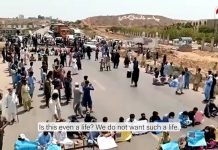




Protest rallies, sit-ins and conferences were held across Pakistan on Saturday to mark the International Day of the Victims of Enforced Disappearances, with rights groups, political leaders and families of the missing calling on Pakistani authorities to end the decades-long crisis of enforced disappearances in Balochistan and other regions.
In Karachi, the Human Rights Commission of Pakistan (HRCP) organised a session where speakers described enforced disappearances as a “grave violation of the Constitution and international human rights law and a crime against humanity.”
The session was moderated by activist Sadia Baloch and addressed by human rights advocate Dr Tauseef, Aurat Foundation director Mehnaz Rehman, and senior journalist Sohail Sangi, among others. They urged the state to immediately end the practice, produce detainees in court, and legislate to criminalise enforced disappearances.
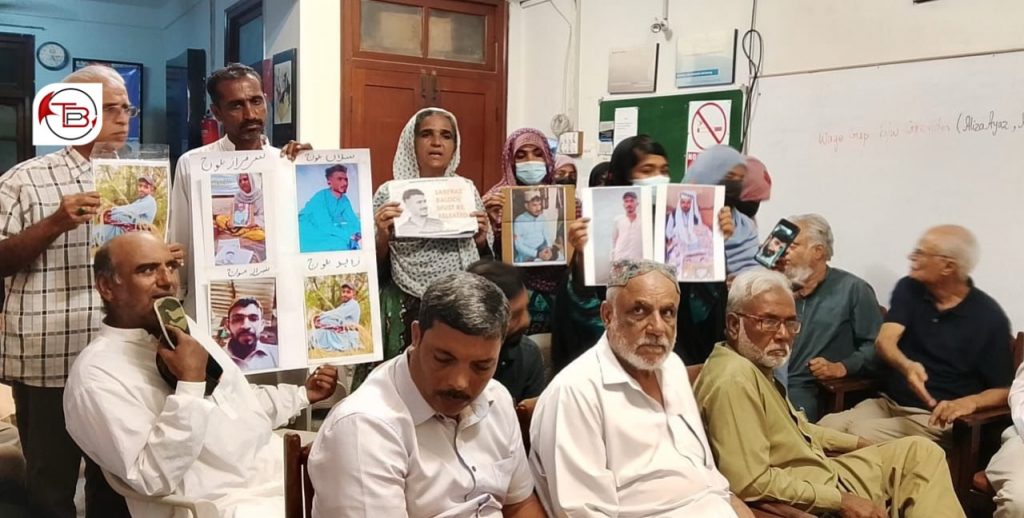
Families of missing persons from Balochistan, including the relatives of Zahid, Sarfaraz, Sheeraz and Seelan Baloch, shared their stories of prolonged waiting, saying families faced severe psychological and financial distress as months and years passed without news of their loved ones.
At the conclusion, HRCP issued a list of demands, including the immediate recovery of all missing persons, the criminalisation of enforced disappearance through urgent legislation, ratification of the UN Convention for the Protection of All Persons from Enforced Disappearance, accountability for state institutions involved in disappearances, and the restructuring of Pakistan’s Commission of Inquiry on Enforced Disappearances (COIED). The group also urged that the UN Working Group on Enforced and Involuntary Disappearances be invited to Pakistan.
In Islamabad, families of Baloch missing persons and incarcerated Baloch Yakjehti Committee (BYC) leaders continued their sit-in for the 47th consecutive day, organising a conference titled “Memory as Identity: Historicizing Enforced Disappearances to Understand the Present.” The event was attended by human rights defenders Amina Masood Janjua, Tahira Abdullah, and representatives of the Pashtun Tahafuz Movement (PTM), among others.
Nadia Baloch, sister of detained BYC leader Dr Mahrang Baloch, said her sister represented “the voice of the Baloch nation and a herald of a new dawn. The state does not merely want to imprison her, it seeks to crush the hope that inspires the Baloch people to struggle for justice and freedom.”
Saira Baloch, the sister of Asif and Rasheed, who were forcibly disappeared seven years ago, said:“These seven years are not just time but moments filled with pain, helplessness and waiting. Yet the flame of hope still burns in our hearts. The greatest strength for their release is our unity.”
The sister of Shabir Baloch, a leader of the Baloch Students Organization-Azad, said, “When Shabir was abducted, my grief was limited to him. But today, every wound of Balochistan is my wound. Despite all hardships, we will not retreat from resistance.”
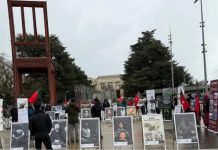
Silent protests were also staged in Turbat, Dalbandin and Karachi by the BYC, where demonstrators carried placards and banners demanding the recovery of the missing.
In Dalbandin, a conference was held to discuss the long-term impact of disappearances, while in Turbat women and children joined a silent demonstration outside the press club. Protesters said thousands of people have been missing for years, leaving families to endure a “life of painful waiting.”
Meanwhile, in Quetta, the Voice for Baloch Missing Persons (VBMP) held a press conference at its long-running protest camp outside the Press Club. VBMP chairman Nasrullah Baloch said disappearances had intensified this year, with hundreds of young men, elderly and even some women forcibly disappeared.
He criticised repeated ordinances that grant security institutions sweeping powers, allowing people to be held for months without trial. He said that despite courts repeatedly issuing orders for the recovery of disappeared persons, “no action was ever taken,” describing the disregard of judicial directives as a grave affront to the rule of law.
He cited Articles 9 and 10 of Pakistan’s Constitution, which guarantee the right to life, liberty and legal safeguards, saying enforced disappearances violated both domestic and international law.
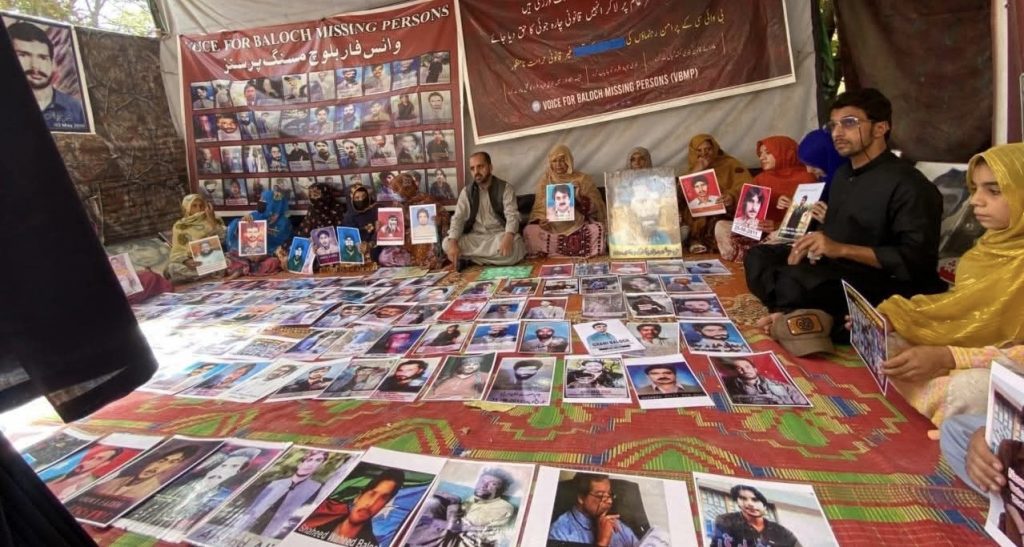
The VBMP called for the immediate recovery of all missing persons, transparent accountability of those involved, and comprehensive legislation to end enforced disappearances. Families attending the conference vowed to continue their struggle until their loved ones are released and those responsible are held accountable.
“If only our loved ones had died, we would at least have been able to bury them. But today, we do not even know whether they are alive or not,” families said.
Rights groups have repeatedly said the culture of impunity surrounding enforced disappearances is deepening alienation in Balochistan and other regions. Observers argue the state’s failure to criminalise the practice, coupled with ongoing reprisals against families and campaigners, risks further fuelling instability across the region.