











Armed clashes, highway blockades and tight restrictions were reported in several districts of Balochistan on Monday, as tensions remain high on the first anniversary of the Baloch Liberation Army’s (BLA) “Operation Herof.”
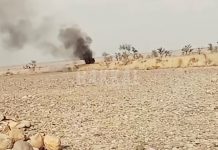
Heavy clashes broke out near Aamach Dam in Mastung district between Pakistani forces and Baloch fighters. Local sources said several soldiers were killed or injured, with helicopters seen transporting bodies and injured personnel to Quetta. Additional troops were deployed to the area.
Sources also reported that Baloch fighters set up checkpoints in the Dasht area of Mastung, near Quetta, on Monday night. Earlier in the day, armed men carried out a blockade at Kadkocha in Mastung district, halting traffic for several hours.
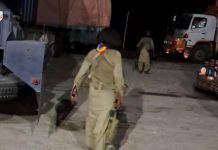
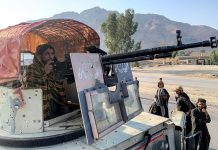
In Kech district’s Kalatuk area, fighters established a checkpoint on the main highway, where Levies personnel were briefly detained. Witnesses said their weapons were seized before they were released. Armed men continued searching vehicles on the road for several hours.
Meanwhile, a security checkpoint came under attack in the Mithri area of Sibi. In Turbat city, a grenade blast targeted Pakistani forces conducting a blockade. Local sources said at least two personnel were killed or injured.
What is ‘Operation Herof’?
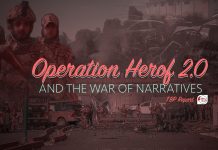
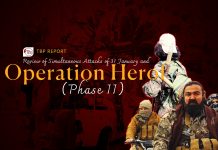
The Baloch Liberation Army (BLA) launched “Operation Herof” on the evening of 25 August 2024, describing it as the first phase of a multiphase resistance campaign to “reclaim Balochistan.” The word “Herof” means “Black Storm” in the Balochi and Brahui languages.
Hundreds of fighters from the group’s special units, including the Majeed Brigade, the Special Tactical Operations Squad (STOS) and the Fateh Squad, took part in the offensive. The operation lasted nearly twenty hours and temporarily extended control across large parts of the region.
The BLA said it killed more than 130 Pakistani soldiers and took control of major highways from Makran to Koh-e-Suleiman as well as government installations. In Bela, the group claimed to have occupied a military base for twenty hours after a female suicide bomber rammed an explosives-laden vehicle into the compound.
Simultaneous attacks were reported in 14 districts, where police and Levies stations were stormed, weapons seized, railway bridges destroyed and key roads blocked.
Analysts described the offensive as the largest coordinated action in the history of the Baloch insurgency, saying it showed the group’s ability to plan and execute complex operations against military and economic targets.
In its communique, the BLA said “Operation Herof” was the first phase of preparations to “regain control of Baloch land.” Observers believe the group intends to mount even larger attacks in the future.
Since then, the BLA has carried out a series of large-scale, coordinated assaults, including blockades, town takeovers and raids on security installations. The group has described these as military drills in preparation for the second phase of “Operation Herof.”
The Baloch Martyrs Committee also organized a programme to pay tribute to the fighters who took part in “Operation Herof,” while Baloch social media activists (BSMA) launched an online campaign to honour and remember them.
Security Measures Tightened
Meanwhile, in response to the surge in attacks and the anniversary of “Operation Herof,” Pakistani authorities have stepped up security measures across Balochistan, imposing restrictions that residents say amount to collective punishment.
Pakistan Railways confirmed that operations of the Jaffar Express between Quetta and Peshawar have been halted for two days. Officials said the train would not run from Quetta to Peshawar on Monday and Tuesday, while services from Peshawar were also suspended.
In Basima, authorities issued an order banning all movement between Green Chowk and Durog from 10:00 p.m. to 5:00 a.m., warning residents they would be “held responsible for any loss of life or property” if found outside without permission.
Similar curfew-like restrictions have been imposed in other districts. In Kech’s Nasirabad area, markets have remained shut for days. Locals said security forces detained several shopkeepers who attempted to reopen, leading to shortages of essential goods.
Ziarat has also been under curfew-like restrictions for more than a week following the abduction of Assistant Commissioner Afzal Baqi and his son on 10 August. Shops, schools and colleges remain closed, with residents warning of food shortages and disruption to education. They urged the government to restore normal life in the city.
Authorities earlier suspended internet, mobile and banking services in several districts, citing security concerns. Security patrols were also stepped up, with residents in Hub and Lasbela reporting troops in plain clothes and tighter checks on roads. Passenger buses have also been barred from entering some cities if they failed to arrive at officially designated times.
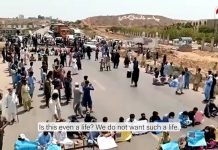
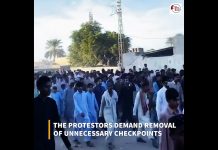
In Turbat, frustration over such measures boiled over on Monday, when passengers staged a sit-in on the M-8 highway against what they described as harassment at Frontier Corps checkpoints. Transporters said buses from Karachi to Makran Division were repeatedly searched and delayed, causing distress to travellers.
Protesters blocked the highway after buses were stopped at Jadgal Dun for arriving late. They demanded an end to restrictions that they said were unjustified, calling for safe and uninterrupted travel.
Political groups in Balochistan have also criticised the measures, arguing that authorities have failed to stop armed attacks and instead subject civilians to harassment in the name of security. They called on the government to ease restrictions and review its policies.