









The Baloch Yakjehti Committee (BYC) held its fifth Central Committee meeting under the chairmanship of Deputy Organizer Lala Wahab Baloch, where members conducted an in-depth review of the organization’s current standing, political shifts in Balochistan and the broader region, and laid out its upcoming policy, programs, and strategic direction.
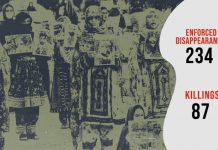
Despite facing an intense state-led crackdown, including the “illegal arrest” of leadership, an unofficial ban on political activities, and ongoing obstructions, the leadership praised the resilience of BYC’s organizational structure and its cadres. According to the speakers, the continued activism and commitment of BYC members across Balochistan have not only sustained but strengthened the group’s political presence and operations. The leadership credited this progress to the organization’s structured attention to grassroots engagement and internal functionality.
They reiterated that BYC is a democratic political body committed to the struggle for Baloch national rights and reconstruction. Simultaneously, the group continues to lead an organized political movement against what it terms the ongoing Baloch genocide, mobilizing communities from Dalbandin to as far as Gwadar and raising critical political awareness. The BYC leaders urged members to remain equally focused on both organizational responsibilities and political mobilization, emphasizing that no illusions should distract from rational, strategy-driven efforts. They stressed that organizational progress depends on thought, reflection, and action, and that every member must play an active role in advancing the broader national movement.
Addressing the rapidly shifting global and regional political landscape, committee members pointed to a range of developments: escalating tensions between Israel and Iran, the protracted war in Ukraine with direct NATO involvement, persistent deadlock in India-Pakistan relations, and the changing power dynamics in South Asia, including India’s Chabahar agreement with Iran, regime shifts in Bangladesh, Russia’s warming posture toward the Taliban in Afghanistan, and U.S.-China economic hostilities. These trends, they noted, have dangerously destabilized the global balance of power.
In this context, the leaders stressed that Balochistan occupies a crucial geopolitical position at the intersection of South Asia, the Middle East, and Central Asia. Yet, they warned, the region’s potential role remains largely ignored in contemporary discourse and state policy. The impacts of regional hostilities, border skirmishes, and foreign proxy conflicts are acutely felt by the Baloch people, and will continue to shape their future, they said.
Given these realities, BYC emphasized that Baloch political movements must adopt pragmatic, strategic, and interest-based approaches rather than reactionary or emotional ones. The leaders said tht given today’s political climate, where state decisions are increasingly driven by pure self-interest rather than ideology or morality, national movements must similarly craft forward-looking, grounded strategies that engage with international dynamics.
The meeting concluded with a detailed assessment of past shortcomings and the formulation of revised organizational programs, policies, and strategies. Several important decisions were reached, which will now be communicated to sub-bodies across the BYC structure.