









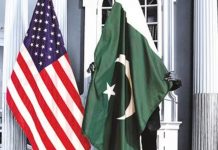







The Baloch Liberation Army (BLA) has rejected the United States’ decision to designate its special unit, the Majeed Brigade, as a foreign terrorist organization, calling the move a “deviation from ground realities” and “an implicit endorsement of the colonial narrative by an international power.”
In a statement issued on Friday, BLA spokesperson Jeeyand Baloch said the group viewed the designation “without surprise and without any sense of added pressure,” insisting the organization is “a resistance force, active solely against the military domination of the occupying state” and committed to “the liberation of its occupied motherland.”
He said Pakistan had “occupied Balochistan in 1948 by force of arms” and that the BLA was “a continuation of the resistance that began that very day.” The group, he added, was “the armed embodiment of Baloch national pride” and did not require “external validation or any international certification.”
Jeeyand Baloch stressed that the BLA operates “under the rules of war” as defined in international humanitarian law, specifically Common Article III of the Geneva Conventions. He said the group conducts all operations in “strict compliance” with these standards, which outline the rights of combatants and the protection of civilians, and noted that non-state resistance movements worldwide had received recognition under the same framework.
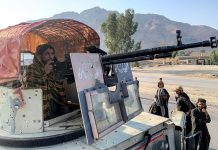
“All BLA operations are directed against the Pakistan Army, Frontier Corps, intelligence networks, death squads and their collaborator gangs within Balochistan,” he said. “We are not opposed to the people of Pakistan, nor to any world power. Our arms are raised solely against the occupier… until the occupation ends.”
The statement accused Washington of echoing Pakistan’s propaganda by alleging that the group targets civilians, which Jeeyand Baloch said was “not part of our manifesto.” He added that the BLA was “under no obligation to justify the nature of our struggle to anyone” and would not “conform to any narrative that serves state interests.”
He said the BLA recognised that US policy was shaped by “security, treaties and geopolitical interests” and claimed such designations reflected “political balancing rather than justice on the ground.” He said the group did not regard such lists as “legal or moral authority” and described the move as an attempt to “criminalize a seventy-five-year-old indigenous resistance waged on our own soil.”
The spokesperson reiterated that the BLA’s struggle “falls firmly within the parameters of international humanitarian law” and argued that if resistance against “state oppression, genocide and slavery” was justified anywhere in the world, “Balochistan is no exception.”
The group pledged to continue its fight “until the last occupying personnel leaves our motherland,” adding, “When a nation is stripped of its land, identity, language and resources, every individual becomes a Fidayee (self-sacrificer). Today, every conscious Baloch is a Fidayee.”
“This war is not only fought with weapons, but also with awareness, sacrifice and collective dignity,” the statement said.
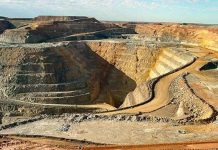
Jeeyand Baloch linked the US decision to Balochistan’s mineral wealth, which he said had become the focus of “global capitalist interests.” He claimed Pakistan was offering these resources to foreign corporations and turning the region into a “silent economic colony,” adding, “When national resistance stands in the way of these projects, it is no surprise to see such resistance declared unlawful on a global stage.”
He invited the international community to “visit Balochistan and witness the reality on the ground.” “See the mass graves where our youth lie buried. Look into the eyes of mothers whose sons have been missing for decades. Witness cities where speech is forbidden and villages subjected to Pakistani military operations carried out under the cover of darkness. Then decide, if organized resistance rises against such oppression, is it terrorism or is it the defence of human dignity?” the statement said.
The BLA said the United States and the wider international community must acknowledge that “the Baloch nation and its revolutionary resistance are naturally aligned with global powers that value justice, stability and principled partnerships.”
It contrasted the BLA’s “disciplined resistance movement rooted in national vision” with Pakistan, which it accused of violating “every principle upon which civilized nations are built” and of having “repeatedly broken agreements, promises and trust for self-interest.”
“If the United States seeks genuine stability, grounded relations and lasting regional interests, it must recognize its natural allies, the Baloch nation… and the Baloch Liberation Army, committed solely to the liberation and justice of its motherland,” the statement read.
Jeeyand Baloch concluded by pledging that the BLA would “never retreat from its ideological, military or revolutionary responsibilities” and would not allow “state propaganda, international labels, or global decisions” to block its path, vowing to continue the struggle “until Baloch national liberation and sovereignty are achieved.”