













The government has extended Section 144 across Balochistan for another 15 days, keeping restrictions on public gatherings and certain activities in place until 31 August. Officials say the measure has been taken in view of heightened security concerns during August, when, according to authorities, armed groups typically increase their attacks around key dates such as 11, 14 and 26 August.
Under the order, pillion riding on motorcycles remains banned, motorcyclists are prohibited from covering their faces, and gatherings of five or more people are not allowed. Night-time movement of public transport has also been restricted since 13 August, with buses and other commercial vehicles barred from operating on highways between 5 p.m. and 5 a.m. in what the government described as a precautionary measure.
In addition, mobile internet services (3G and 4G) have been suspended across all 36 districts of Balochistan since 6 August. The authorities have said the blackout will continue until 31 August for security reasons. However, the decision has drawn widespread criticism.
Earlier this week, the Balochistan High Court ordered that mobile internet be restored in all but the most sensitive districts. Despite the ruling, services remain suspended across entire Balochistan, severely affecting communications, online education, freelance work, business activities and news reporting. Students have warned that their academic year is at risk, while local journalists say the shutdown has hindered the free flow of information from the region. Civil society groups have called on the government to respect the court’s directives and restore connectivity.
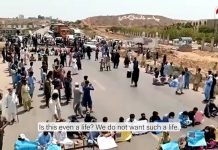
Meanwhile, in Kech district’s Nasirabad area, a curfew has been reportedly in effect for several days, leaving markets closed and residents confined to their homes. Local reports suggest that several shopkeepers attempting to open their businesses were briefly detained by security forces. Residents say the restrictions have led to shortages of essential goods.
The All Parties Kech alliance criticised the curfew in a statement, calling it an “anti-people measure” that has caused unnecessary hardship for ordinary citizens. The group urged the deputy commissioner of Kech to intervene and restore daily life in the area.
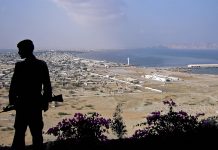
Similar concerns have been raised in other parts of Balochistan, including Gwadar, where residents said security forces sealed the city and closed entry and exit points around Pakistan’s National Day.
The government maintains that these restrictions are necessary to prevent militant attacks. However, political parties and rights groups argue that the measures, particularly the blanket internet shutdown, amount to collective punishment and disproportionately impact civilians.