

















Families, political parties, and civil society actors in Balochistan are raising renewed concerns over what they describe as an ongoing pattern of enforced disappearances, prolonged detentions, and alleged misuse of anti-terrorism laws against political activists and students in the region.
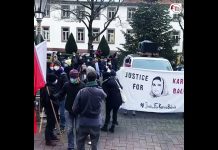
In Pasni, relatives of a young man, Siraj Aslam, held a protest outside the local press club on Sunday following his alleged enforced disappearance. According to the family, Siraj was taken from his home on the night of 5 July and has not been heard from since. Protesters carried placards with Siraj’s photo, calling for his immediate release or, if any charges exist, his presentation in a court of law.
Speaking to media, Siraj’s father, Muhammad Aslam, stated, “Our son is innocent. He has never been involved in any illegal activity. He was taken without explanation, and our family is under immense psychological stress.”
Local activists and human rights advocates joined the demonstration, expressing alarm over what they view as a growing crisis of disappearances in Balochistan. They noted that the issue has persisted for years, despite repeated calls by national and international human rights organisations to address it.
Separately, the National Democratic Party (NDP) issued a statement condemning what it called the “deliberate and systematic use of repressive measures” against political voices in Balochistan. The statement cited the ongoing legal proceedings involving Ghani Baloch, a NDP leader, who was allegedly picked up by law enforcement on 25 May in Khuzdar and kept at an undisclosed location.
The party alleges that police refused to register an FIR at the time of Ghani Baloch’s disappearance. Despite court directives, the investigation remains stalled, and during his third court appearance on Monday, the NDP accused police of using “delaying tactics” and failing to submit basic reports on the case.
“This is not just about one individual,” the party’s spokesperson said. “It represents a broader campaign to silence intellectual and political consciousness in Balochistan. Disappearances and legal harassment are being used as tools to crush dissent and democratic expression.”
The NDP further criticised what it described as a shift in the state’s approach, from preventive detentions under public order laws to charges under anti-terrorism laws. Referring to the recent court remand of Baloch Yakjehti Committee (BYC) leaders, who were arrested months ago under Section 3 of the Maintenance of Public Order (3MPO), the party said they were now being reprocessed through terrorism charges without clear evidence.
“These measures not only violate fundamental human rights but also undermine the legal process itself,” the NDP statement added. “Peaceful political work is being equated with terrorism, a conflation that damages both justice and social stability.”
No official comment has been issued by the authorities in response to the allegations made by the families and the NDP. The issues of enforced disappearances and the use of counterterrorism laws against activists in Balochistan remain deeply contested and politically sensitive in Pakistan.