








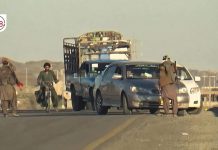










Following a rise in attacks on passenger buses and security forces in the region, the Balochistan government has announced stricter security measures for public transport traveling to Punjab and other parts of Pakistan. This decision comes in the wake of recent deadly attacks onmilitary personnel travelling in public transport.
On July 15, the Balochistan Home and Tribal Affairs Department issued a directive to all commissioners, deputy commissioners, and the transport department, mandating that buses traveling to Punjab and other parts of Pakistan must comply with new security protocols. The measures, effective immediately, include the installation of two security guards on each bus, CCTV cameras, GPS tracking systems, and panic alarm buttons.
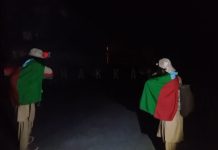
The directive comes after the Baloch Liberation Army (BLA) claimed responsibility for a series of deadly attacks, including one on July 10, when BLA fighters killed ten members of Pakistani intelligence agencies on the N-70 highway near Zhob, Balochistan. In a separate attack on July 16, the BLA’s Fatah Squad targeted a bus carrying Pakistani soldiers in Kalat, killing 27 alleged security personnel while sparing the civilians.
The Balochistan government has described these new security measures as essential for the protection of the public, given the growing threats to the safety of passenger buses, especially those traveling along key highways. However, local transport operators have raised concerns over the feasibility of implementing these measures without sufficient financial and technical support from the government. Haji Daulat Lehri – the owner of Sada Bahar Transporters, the largest transport company in Balochistan – criticized the government’s decision, stating, “Security is the state’s responsibility. Instead of fulfilling its obligations, the government is shifting the burden onto transporters. Even if two security guards are deployed, they cannot fight off dozens of attackers.”
In some parts of Balochistan, the local administraation has already ordered the public transporters to implement the new security measures. For instance, the Assistant Commissioner of Surab has ordered security enhancements for all public transport vehicles operating in the area. These security measures, which will come into effect on July 21, 2025, include the installation of private security guards, GPS trackers, CCTV cameras, and emergency alarm buttons. The district’s administration has emphasized that non-compliance with the new measures by July 22, 2025, will lead to legal action.
Local transporters, however, have expressed strong reservations about the feasibility of the new security requirements. Many have pointed out that such measures, especially for long-route buses, are difficult to implement without additional government support. In the past, similar calls for better security were made after an attack in April 2025, when the BLA targeted a civilian bus carrying military personnel near Nushki.