

















Written by Dr. Mahrang Baloch
Genocide is not merely a word; it is a grim chapter in human history that casts a shadow of uncertainty over our future. It recounts the harrowing tale of those whose existence was systematically erased. Genocide not only involves physical annihilation but also a comprehensive strategy to wipe out a people’s identity, strip them of their resources, and obliterate their culture.
Balochistan, rich in gold, copper, gas, and mineral reserves, has become a battleground where the interests of the powerful clash with the very existence of the oppressed. The Baloch people, rightful heirs to this land, are being deprived not only of their resources but also of their freedom, culture, and language.
Genocide is a gradual process—a silent conspiracy that systematically weakens the foundations of a people. This is precisely what is happening to the Baloch nation. Their villages are being burned, their youth abducted, their mothers left mourning for their children, and their resources plundered, dragging them further into destitution. Therefore, we boldly proclaim to the world that the Pakistani military is committing genocide against the Baloch people.
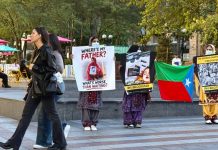
The most horrifying manifestation of Baloch genocide is enforced disappearances. Thousands of Baloch men, women, and children remain missing to this day. The tears of their parents and the cries of their siblings are evidence of the boundaries of state oppression being crossed. These disappearances are not only meant to instill fear but also to extinguish the Baloch struggle for freedom.
This oppression, however, goes beyond physical atrocities. Another lethal form of genocide is economic exploitation. Looting a nation’s resources, poisoning its lands, and forcing its people into the depths of poverty are also methods of genocide. Balochistan offers numerous examples of such exploitation, with the Reko Diq and Saindak projects being among the worst.
Reko Diq, one of the world’s largest gold and copper reserves, could have brought development and prosperity to the Baloch. Instead, it has become a center of plunder for the Pakistani state and foreign corporations. While Pakistan and other powers benefit from these resources, the Baloch remain deprived of even the most basic rights, such as clean water, healthcare, and education.
Similarly, the Saindak project exemplifies this economic exploitation at its worst. Millions of dollars’ worth of minerals are extracted daily, yet the local population gains nothing. Rather, the people of Chagai have been driven into deeper poverty, unemployment, and severe health crises.
Both projects illustrate that economic exploitation is a silent form of genocide. The land of the Baloch people has been contaminated with toxic chemicals, their children suffer from severe health issues, and their lives are pushed further into marginalization.
Philosophy teaches us that justice is vital for any nation’s survival. Aristotle defined justice as giving each individual and nation their due. When a nation’s rights are snatched away, its lands seized, and its resources looted, such injustice becomes a grave breach of basic human principles.
The atrocities committed against the Baloch compel us to question our trajectory as a society. Will we remain silent spectators, or will we speak out for the oppressed whose voices are being silenced? The time has come to acknowledge our responsibilities and stand against this injustice.
To my Baloch brothers and sisters, this is not the time for silence but for struggle. We must cultivate unity in our ranks. History shows us that when a nation stands united, it can resist even the most severe oppressions. We must rise to protect our culture, language, and resources.
Baloch youth must raise their voices for their rights through education, awareness, and struggle. Be it on international platforms or local fronts, we must fight for control over our resources. We must bring our plight to global attention so the world comprehends the suffering of the Baloch nation.
This is not a time to stay quiet. It is a time to fight for our land, identity, and survival. The chains of oppression break only when the oppressed rise up for their rights. Today, our voices are stifled, our lands taken, and our culture erased. But we can no longer endure this injustice in silence. We must unite in this struggle for our survival, our children’s future, and the preservation of our dignity.
I call upon all of you, wherever you are, to step out of your homes, raise your voices, and join this movement for the survival of the Baloch nation. This battle is not just for a few individuals; it is the struggle of an entire nation. It is time to reinforce our ranks, show our collective resolve, and lay the groundwork for a brighter future for those who are oppressed and silenced.
The history of the Baloch is one of struggle and courage. Today, we must rekindle that legacy. Every Baloch individual has a role to play. Let us unite to ensure the success of this movement so that future generations may breathe in the air of freedom. This is a time of unity, bravery, and struggle. The steps we take now will be etched in history in golden letters.
Disclaimer: The views and opinions expressed in this article are those of the author and do not necessarily reflect the official policy or position of The Balochistan Post or any of its editors.