




















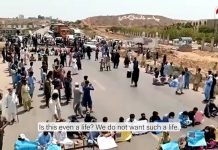





Activist Sammi Deen Baloch has stated that the Pakistani state and authorities cannot dismiss the issue of enforced disappearances and missing persons in Balochistan as mere propaganda. She asked the Pakistani state to reflect on its policy-making and legislative shortcomings to understand and address its failures in Balochistan.
In a five-minute video message on the social media platform ‘X’, previously known as Twitter, Sammi Deen Baloch addressed the Pakistani state’s denial of the pressing issue of enforced disappearances and missing persons in Balochistan. She highlighted that the movement for the safe release of Baloch missing persons, which she is part of, is gaining momentum and international attention. Conversely, she criticized the Pakistani state for attempting to justify or deny the existence of enforced disappearances using state propaganda.
She refuted the Pakistani authorities’ claims that the missing persons are engaged in an armed conflict against the state in the mountains, fighting for Balochistan’s independence. She said that the individuals are not detained from a deserted wasteland, but from their homes, markets, offices, and educational institutions in broad daylight, often in front of their families and witnesses, with some abductions captured on mobile phones and CCTV.
Sammi Deen Baloch revealed that the few Baloch missing persons who have been released return home bearing emotional and psychological trauma. Upon their return, many have disclosed that they were held in state prisons. She questioned the state’s narrative of labeling the missing persons as militants, pointing out that if this were true, the state would interrogate those who have returned. This discrepancy suggests that these individuals were not in the mountains but in state custody, she said.
She emphasized that enforced disappearances have impacted nearly every family in Balochistan, with most individuals never returning home. Those who do return struggle to reintegrate into society, carrying the psychological wounds of their confinement. Some attempt to readjust, others seek safety in foreign countries, and in extreme cases, some join the guerrilla war against the Pakistani state.
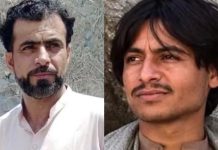
Sammi Deen Baloch also mentioned two instances where the state’s propaganda attempted to depict Baloch missing persons as militants. In these cases, individuals were initially forcibly disappeared by the state, after which their families campaigned for their safe returns. After they were released, the families stopped campaigning. The individuals then joined the Baloch armed groups, and the state machinery then used this to assert that these individuals were militants, not missing persons.
She criticized the state’s use of photos of family protests for the safe release of missing persons to falsely label them as members of proscribed armed groups. Furthermore, she lamented the media’s ignorance of the actual situation in Balochistan, accusing it of blindly accepting and republishing the ISPR’s biased and inaccurate statements. She said that the media should investigate the reasons behind the escalating insurgency in Balochistan and the factors driving people to take up arms against the state.
Sammi Deen Baloch asserts that peaceful attempts to present their case to the authorities were met with violence and imprisonment. This, she claims, demonstrates that the authorities are only willing to engage in negotiation with armed individuals, not those who protest peacefully.
She attributed the situation in Balochistan to the state’s flawed policies and urged the state to engage in self-reflection. She called for an end to the use of propaganda to discredit the significant issues of enforced disappearances and missing persons. Instead, she said the state should try to resolve these issues through legislative means and the correction of past mistakes.