








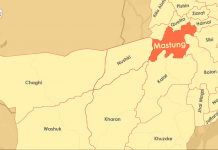









Noshki is one of Balochistan’s oldest and strategically significant cities, widely regarded as the principal urban center of the Rakhshan region. Located approximately 150 kilometers southwest of Quetta, capital of Balochistan, the city occupies a critical position along key regional and cross-border corridors.
The city is surrounded by vast desert plains that stretch north and south toward the Helmand River basin. Geographically, Noshki is a border region: its western boundary connects with Afghanistan’s Kandahar province, while Iran lies only a few kilometers away. This location has long given Noshki both strategic depth and regional relevance.
Beyond geography, Noshki holds a distinct place in Balochistan’s political, resistance, and literary history. The city has produced numerous prominent political activists, resistance figures, and writers. It is widely recognized as an important center for Balochi and Brahui language and literature, where political consciousness and literary expression have evolved over decades.
Operation Herof: A Structured Military Campaign
In the morning of January 31, at around 5:00 a.m., the Baloch Liberation Army (BLA) announced the launch of Operation Herof – Phase Two. The operation involved near-simultaneous attacks across multiple cities and districts in Balochistan, including Quetta, Noshki, Mastung, Dalbandin, Kalat, Kharan, Panjgur, Gwadar, Pasni, Turbat, Tump, Mangochar, Lasbela, Kech, and other areas. The BLA described the operation as a coordinated and integrated military campaign.
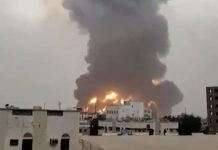
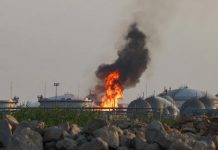
According to local sources, the most intense fighting was reported in Noshki, where tensions remained high even four days after the operation began. Reports indicate that several government and semi-government installations were targeted, including the Frontier Corps headquarters, security camps, the Counter Terrorism Department (CTD) headquarters, the central jail, the Deputy Commissioner’s office, and other official facilities. There were claims of heavy damage and attempts to seize control of key sites.
Residents and local observers reported that checkpoints were established on several entry and exit routes by different BLA units, contributing to an unusually tense and restricted situation across the city. According to these accounts, Pakistani security forces appeared largely confined to their camps. Analysts suggest that these developments point to a significant disruption in the city’s security dynamics.
In periodic statements, the BLA’s media wing claimed that several of its sub-units were participating in the operation, including the Majeed Brigade, Fateh Squad, Special Tactical Operation Squad, and its intelligence wing, ZIRAB. The group portrayed the campaign as part of a broader and structured military phase.
A notable element of the BLA’s current military posture is its reliance on Fidayeen (suicide) fighters, described by the group as a key component of its strategy. So far, reports suggest that at least 18 Fidayeen fighters have taken part in Operation Herof, indicating the potential for prolonged and violent confrontations.
The Strategic Significance of Noshki
Noshki’s importance is further amplified by its proximity to major mineral projects, most notably Saindak and Reko Diq, both internationally recognized for their vast gold and copper reserves. A Chinese company currently operates the Saindak project, while a Canadian firm is active at Reko Diq, placing the region firmly within the orbit of global economic and strategic interests.
Political and military analysts argue that the focus on Noshki during Operation Herof is not incidental but reflects a deliberate geostrategic calculation. Establishing influence in the largest and most consequential city of the Rakhshan region is seen as an indication of the BLA’s expanding operational capacity. Analysts note that the ability to exert partial control over a major urban center and sustain high-intensity engagements could make it easier for the group to project influence across other parts of the region.
This development is also widely interpreted as a message to international mining projects and the foreign companies operating in the area, highlighting the growing security risks surrounding strategic economic assets.
Observers further note that the operation signals a shift in the BLA’s approach, from traditional hit-and-run guerrilla tactics to a more structured and organized military posture, marked by coordinated operations, manpower deployment, and strategic planning.
Possible Future Implications
Security analysts believe that prolonged and intense clashes in a large and sensitive city such as Noshki suggest that the armed conflict in Balochistan may be entering a new phase. The implications could extend well beyond Balochistan, affecting regional security, political stability, and economic activity.
As the situation continues to evolve, analysts expect the regional and international consequences of these developments to become clearer in the coming days.