







By Fareed Baloch
Across Balochistan and among its diaspora, 13 November once again arrives as a day of remembrance. The date, observed as Baloch Martyrs’ Day, carries a long, complex history; part sorrow, part pride, and part reflection on what the idea of “sacrifice” means to a people spread between mountains, deserts, and coasts.
The commemoration traces back to 13 November 1839, when Mir Mehrab Khan, the Khan of Kalat, was killed defending his stronghold against British forces.
His death became, over generations, a symbol of resistance and self-determination. For that, the 13th of November entered Baloch historical consciousness as a day to honour those who have fallen “for land and identity”.
While the date’s interpretation varies, from historical remembrance to political symbolism, its emotional significance remains constant. Each year, families, students, and activists recall the lives lost in struggles that followed, from colonial incursions to later “forceful annexation” of their land.
Commemorations, References and Seminars Across Balochistan and the Diaspora
Across Balochistan and in several countries abroad, Baloch communities marked 13 November as Baloch Martyrs’ Day, a date observed in remembrance of those who lost their lives in struggles associated with the region’s political and social movements.
Public gatherings, rallies, and cultural events were held in various districts of Balochistan and among diaspora groups overseas. Participants paid tribute to individuals regarded as national martyrs, recalling their contributions to what they described as the struggle for “freedom, identity, and rights.”
The day was also observed widely on social media platforms, where users shared messages, artwork, and poetry dedicated to remembrance.
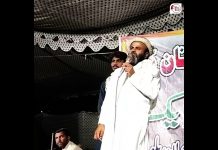
The Baloch Martyrs Committee organized multiple seminars and remembrance gatherings across different regions, each centred on honouring the sacrifices of the men and women who, according to the organizers, “laid the foundation of the national struggle with their blood.” In Quetta, a seminar held under the banner of the Committee brought together speakers who described the 13 November commemoration as a symbol of “sacrifice and continuity,” noting that the observance serves as a reminder to future generations of perseverance, cultural identity and collective resilience.
BSO Azad continued its tradition of digital mobilization by launching a coordinated online campaign marking 13 November. Alongside calling on the public to share articles, stories, photos, videos and tributes under the campaign hashtag, the organization also circulated its own materials across social media, including images of martyrs, short explanatory texts and archival excerpts, to encourage wider participation. The campaign offered a space for collective observance at a time when physical mobility across Balochistan remained limited due to security restrictions.
BSO Pajjar held a memorial reference in which the session opened with two minutes of silence. Senior members, including Central Vice Chairman Babul Malik Baloch, spoke about the role of student activists and highlighted the historical contributions of martyrs associated with the student organizations, framing the gathering as a moment of reflection and renewed commitment for younger members.
A Balochi Deewan was also held in memory of the martyrs, featuring performances of resistance poetry and folk songs in Balochi and Brahui languages. Local poets and singers, including Ustad Mir Ahmed Baloch, Sawal Kandeel, Meeral Baloch, and Sarfaraz Wahid, performed verses honouring those remembered on the occasion. The event was broadcast live on their Facebook page, allowing supporters from across the region and the diaspora to participate virtually.
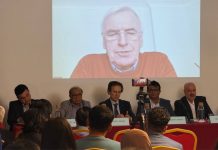
Beyond Balochistan, diaspora communities held their own commemorations across Europe and the United Kingdom. In the Netherlands, the Baloch National Movement (BNM) organized a seminar attended by Baloch and Pashtun activists. Participants reflected on the historical context of Martyrs’ Day, its ideological significance and the responsibilities placed upon younger generations. Speakers described the sacrifices of the martyrs as acts rooted in “organized national consciousness” rather than isolated responses to oppression, and urged youth in exile to maintain political awareness and cultural identity.
In Berlin, the BNM chapter convened another seminar where senior leaders, intellectuals and community members gathered to mark the day. The event emphasised the unity of purpose across different regions and organizations, noting that the martyrs, regardless of affiliation, “shared one aim.”
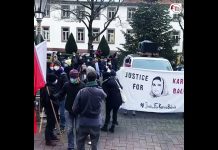
The BNM UK chapter held a gathering in Peterborough, where members of the organization and local Baloch residents paid tribute to what they described as the “fallen heroes of Balochistan.”
BLA Releases Documentary for Martyrs’ Day
The Baloch Liberation Army’s media wing, Hakkal, released a six-minute documentary titled Honouring the Brave Souls on the eve of Baloch Martyrs’ Day. The documentary is composed almost entirely of still images: portraits of fallen BLA fighters and other Baloch martyrs, group photographs taken in mountain encampments, and graveyard scenes in which women and children scatter flowers over the graves. Alongside these visuals, the documentary relies fully on its narration to articulate the meaning and philosophy associated with the day.
The narration opens with a male voice in Balochi, setting the central tone of the documentary: “13th November is the day when not memory, but vows come to life again. When we remember our martyrs on this day, it’s not merely remembrance, it’s a mirror in which we see our past, measure our present, and renew our promise for the future.” He describes the martyrs as “a caravan” moving through prisons, mountains and “fields of sacrifice,” carrying a message for those who come after: “We gave our lives so you could walk with your heads held high.”
The female narrator, speaking in Brahui, follows with a reflection on martyrdom as a living presence rather than a closed chapter in history. “A martyr’s grave is not just a mound of earth; it is a pledge,” she says, adding that the story does not end with death. “The martyr’s blood never falls to the ground; it becomes the language of history,” carried into lullabies, children’s smiles and “the footsteps of our youth.”
Throughout the documentary, both narrators return repeatedly to the idea that sacrifice forms the core of collective identity. The male narrator calls the martyr’s act “the asset of a nation,” insisting that freedom is “a dream watered by the drops of blood” and that “the shadows of slavery are never eternal.” The female narrator describes 13 November as “a story filled with courage, sacrifice and hope,” portraying the martyrs as “lamps in dark alleys, burning themselves to light the way for others,” and reminding viewers that “freedom always comes at a price.”
As the documentary progresses, the tone becomes more declarative. “The light born from the spirit of our martyrs conquers every darkness,” the male narrator says, adding that their blood “made the soil fertile, the soil where dreams came into existence.” The female narrator notes that those who “embraced death with a smile” were not only fighters but “the hope of an entire nation,” and that nations which forget their martyrs “lose their way.”
The final passages centre on pledges made to the martyrs. “Freedom is not a gift, it is a continuous struggle,” the male narrator says, calling on the living to protect the dreams left behind. The female narrator adds that the day is not one of mourning but of “rekindling the resolve left behind by the martyrs’ smiles,” saying that their memory gives the strength “to stand as firm as mountains, as untamed as the sea.”
The film closes with a slow sequence of portraits of BLA Majeed Brigade fighters, including its founder, Ustad Aslam Baloch, as the male narrator delivers a final vow: “We are the heirs of our martyrs, the guardians of their dreams. We will never let the flame of their blood be extinguished.”
Statements Marking Baloch Martyrs’ Day
Across Balochistan and the diaspora, political organizations, student groups and rights advocates marked 13 November with statements that reflected not only remembrance but the philosophy attached to the day.
The Baloch Students Organization (Azad), in its editorial for the occasion, framed Martyrs’ Day not as a ceremony but as “a reminder that we are a living nation,” a moment to reaffirm a consciousness shaped by generations of resistance. Drawing a direct line between the defence of Kalat in 1839 and present-day struggle, the organization described Mir Mehrab Khan’s final stand as “the bitter answer” to imperial forces and the beginning of a legacy that “is being followed today with a spiritual awakening.” The statement stressed that martyrdom remains central to political struggle: “Revolution is not a mere celebration… it undergoes an endless series of sacrifices, among which martyrdom is the highest form.” It concluded by urging that martyrs must live not only in memory but in “our thoughts, ideas, and most importantly in our actions.”
The Baloch Martyrs Committee said that on this day “the courage of the sons and daughters of Balochistan guides the path toward freedom,” calling Martyrs’ Day a moment of reaffirmation of the struggle “for justice, dignity and national liberation.” The group said that the national movement has advanced “through the great sacrifices of Baloch martyrs,” and noted that youth and women are increasingly “playing a leading role in protecting the homeland and resisting external control.”
The National Democratic Party (NDP) described 13 November as “a symbol of collective sacrifice and steadfastness,” saying that from 1839 to the present, the sacrifices of Baloch martyrs “kept the national consciousness alive.” The party called the land of Balochistan, its mountains, plains, coasts and resources, “a trust of the martyrs,” and said that every Baloch, whether a student, labourer, lawyer or government employee, holds a responsibility to “fulfil the mission left behind by the martyrs.”
The Baloch National Movement’s Netherlands chapter said that it is now the responsibility of Baloch youth “to understand the mission of their martyrs, carry it forward, and highlight their national identity at every level.” At a separate seminar in Berlin, BNM leaders and intellectuals from other communities said the sacrifices of martyrs form “a path to salvation” for the nation. They noted that although martyrs may have belonged to different regions or parties, they “shared one purpose: an independent Balochistan.”
Malik Bazai, the Europe coordinator of the Pashtun Tahafuz Movement (PTM), said the Baloch and Pashtun nations “share a historic bond” and face the same adversaries. He said PTM salutes “the Baloch martyrs who strengthened the cause of Baloch freedom through their sacrifices,” adding that nations earn dignity “when they do not forget their martyrs.”
Human rights activist Sammi Deen Baloch wrote that Balochistan “is a land that has already memorised its dead,” describing the day as a reminder that identity and survival are shaped by those “who would not surrender their land, their names, their dignity.” She said Martyrs’ Day is not a pause but “a vow we renew each year,” affirming that resistance “moves from hand to hand, from one generation’s grief into the next generation’s spine.”
Security Measures and Restrictions
In the days leading up to 13 November, Pakistani authorities imposed a series of restrictions across Balochistan, citing security concerns. Such measures routinely intensify around dates significant to the Baloch resistance movement.
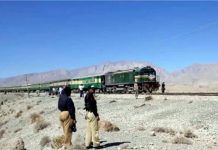
Mobile internet and data services were suspended in more than thirty districts, while several institutions inside the Quetta Cantonment were ordered closed from 12 to 14 November. Intercity transport was halted under directives from the Balochistan Transport Authority, and railway services, already disrupted for weeks, remained suspended, including the Jaffar Express and Bolan Mail.
Section 144 was expanded to ban gatherings of more than five people, pillion riding, tinted vehicle windows, unregistered motorcycles and face coverings in public spaces. Police also prevented the Baloch Students Action Committee (BSAC) from holding a scheduled press conference at the Quetta Press Club, saying no activity could proceed without an NOC from the district administration, alongside other restrictions in force across Balochistan.
The Day’s Broader Meaning
For many observers, Baloch Martyrs’ Day stands at the intersection of history and hope. It is not only about recalling names etched into memory but about examining the continuing challenges of reconciliation, representation, and recognition.
Analysts note that the observance often carries layered meanings. For some it is a solemn national remembrance, while for others it is a symbol of political assertion.
In recent years, the day has also become a moment of dialogue among rights organizations and civic groups who stress that commemoration should go hand in hand with efforts toward freedom, justice and peace.
Echoes Across Generations
From the battle of Kalat in 1839 to the quiet vigils of today, the narrative of remembrance continues to evolve.
Each candle lit on 13 November, whether in a Quetta courtyard or an overseas gathering, represents both grief and persistence.
As dusk falls over Balochistan, the day closes not with slogans but with questions:
How do societies remember without repeating?
How can memory serve as bridge, not boundary?
For those who mark this day, the answers may differ, but the silence that follows each name read aloud remains the same: a moment of respect for those who, in life or in legend, became part of the land’s unfinished story.