
















Baloch “pro-independence” armed groups have claimed responsibility for a series of recent attacks on Pakistani military personnel and government officials, signalling a sharp escalation in the ongoing conflict across Balochistan.
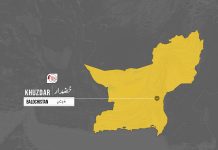
According to a statement issued by the Baloch Raaji Aajoi Sangar (BRAS) — an alliance of several Baloch nationalist armed organisations — fierce clashes erupted in the Zehri area of Khuzdar district after Pakistani armed forces allegedly advanced into the region “with aggressive intent.”
The group’s spokesman, Baloch Khan, claimed that dozens of Pakistani troops were killed in the fighting, while six BRAS fighters were “martyred defending the local population.”
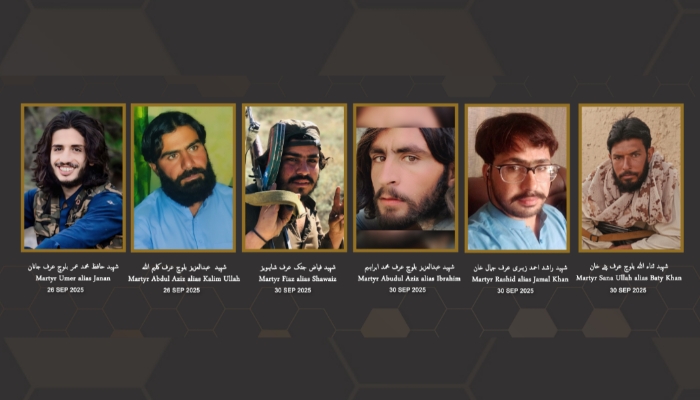
The statement named the six fallen fighters, who were affiliated with the Baloch Liberation Army (BLA) and the Balochistan Liberation Front (BLF) — both constituent groups of the BRAS alliance. The spokesman said the clashes reflected the continued strength of the “Baloch national resistance movement” despite ongoing military operations in Balochistan. He added that BRAS and its allied fronts, including the Baloch Republican Guards and Sindhudesh Revolutionary Army, remained united “under one banner for national freedom.”
There has been no independent verification of the casualty figures provided by BRAS, and Pakistani authorities have not yet issued a statement regarding the reported clashes.
Other recent attacks claimed by Baloch armed groups
In a series of other incidents over the past week, the Balochistan Liberation Front (BLF) and the United Baloch Army (UBA) also claimed responsibility for attacks targeting Pakistani military personnel and federal agencies across Balochistan.
On 20 October, the BLF spokesperson, Major Gwahram Baloch said their fighters ambushed a Pakistani paramilitary vehicle in the Mand area, near the Iranian border, killing five personnel and injuring two. The group claimed that Pakistani helicopters later evacuated the bodies and wounded from the site.
Earlier, on 15 October, the BLF said it attacked two vehicles belonging to the Federal Investigation Agency (FIA) on the Quetta–Taftan highway near Mastung, killing three officers and wounding two others. The organisation alleged that the FIA cooperates with Pakistan’s military intelligence agencies in tracking communications of Baloch political and pro-independence activists.
Separately, the United Baloch Army (UBA) claimed responsibility for a remote-controlled bomb attack on 21 October, targeting a Pakistani Army truck travelling between Dhadar and Sanni in Kachhi district. The UBA said two Pakistani soldiers were killed and one was wounded in the explosion.
These incidents are part of an ongoing pattern of attacks by Baloch “pro-independence” fighters against Pakistani armed forces across Balochistan. While military operations have intensified in the region in recent months, independent verification of casualty figures remains limited due to restricted media access in conflict-affected regions.
No official response from the Pakistani military or provincial authorities was available at the time of reporting. Analysts note that the recent spate of ambushes, IED attacks, and assaults on military convoys highlights the persistence and coordination of Baloch nationalist armed movements, despite years of counterinsurgency efforts by the Pakistani state.