








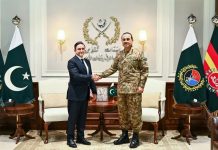



Balochistan’s controversial Chief Minister, Sarfaraz Bugti, during the 17th National Workshop in Quetta, described the ongoing armed struggle in the province as a conspiracy orchestrated by the Indian intelligence agency RAW, branding the Baloch national movement as terrorism. He further stated that this war is not only the army’s but that of the entire nation. However, this stance does not align with the realities on the ground, as no resistance movement can sustain itself for two decades without public support.
To portray the Pakistan Army’s operations in Balochistan as a “national war” is a distorted narrative. There has been consistent public discontent against this conflict, and resistance groups have repeatedly reorganised and re-emerged over different periods. The use of force may temporarily suppress such movements, but it cannot provide a lasting solution.
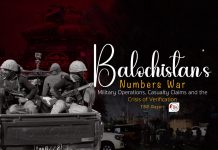
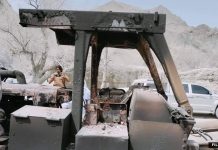
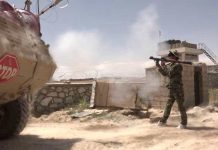
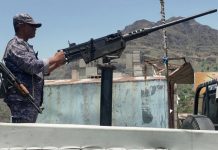
In recent years, the intensity of resistance activities in Balochistan has increased. Highways and government installations have become insecure, while international projects and military targets have repeatedly come under attack. All of this indicates that the armed struggle for independence has enhanced its operational capability.
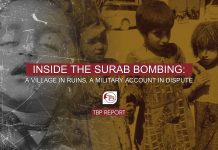
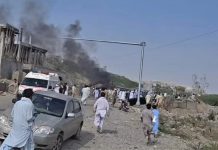
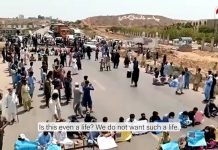
If the war for independence were merely propaganda, the army would not have found it necessary to launch large-scale operations across various regions. The deaths of children and women clearly show that the civilian population is being directly affected.
The denial of ground realities by Pakistan’s ruling establishment cannot change the war-torn state of Balochistan. The situation can be concealed from the world for a short time, but not indefinitely. The current conditions in Balochistan clearly suggest that the Baloch national struggle, through its own strength, will eventually be recognised internationally in one form or another.