




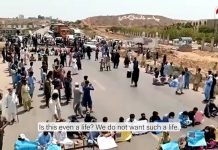
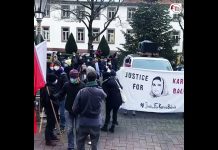


Protests and strikes swept across Balochistan on Monday after leaders of six political parties called a region-wide wheel-jam and shutter-down strike in response to the 2 September suicide bombing that targeted a BNP-Mengal public meeting at Shahwani Stadium in Quetta.
Flights to and from Quetta were cancelled after clashes erupted between police and protesters on Airport Road, where incidents of arson, arrests, baton charges and tear gas shelling were also reported.
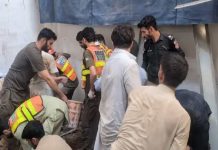
Demonstrators also blocked the road leading to the Balochistan Assembly near the railway station.Protesters said more than 100 people were arrested in Quetta, while many others were injured during the clashes.
The BNP said dozens of political and student leaders, including both Baloch and Pashtun activists, were detained in raids across Balochistan. Those detained included BNP central deputy secretary Malik Naseer Ahmed Shahwani, Malik Rafiq Shahwani, Lala Zafar Mengal and Abdul Manan Muhammad Hasni.
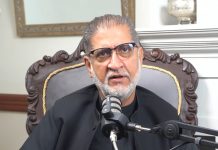
BNP-M chief Sardar Akhtar Mengal alleged that several party workers were injured in police firing and shelling, while senior leaders had been rounded up. “The successful strike has thrown the Form-47 government into confusion,” he said, referring to what the party calls an illegitimate government installed through manipulated election results.
The All Parties alliance condemned what it described as a heavy-handed crackdown, accusing police of carrying out baton charges, firing and tear gas shelling against peaceful demonstrators.
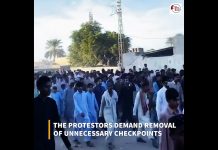
In Kech district and the port city of Gwadar, a complete shutter-down strike was observed, with traffic reduced to a minimum and markets closed. Businesses also remained shut in Awaran, while in Nushki protesters staged a sit-in blocking the highway to Quetta.
At Hub Chowki, demonstrators cut off Balochistan’s land connection with Karachi by blocking the Quetta–Karachi national highway. In Manguchar, police dispersed crowds and arrested BNP leaders.
Pashtun nationalist parties also staged strikes in Loralai, Chaman and other towns, disrupting traffic in the region. Sources said police arrested several Pashtun political activists during the protests.
Reports from other areas of Balochistan were still emerging, with communication affected as authorities again suspended mobile networks and internet services across most of the region.
The Balochistan government had earlier issued a statement warning protesters against disrupting public life. “Strict and immediate action will be taken against those who try to obstruct the freedom of movement and routines of life of citizens,” the home department said.
It warned that “elements who take the law into their own hands will not be tolerated” and that legal action would be taken against attempts to obstruct public facilities or federal institutions.
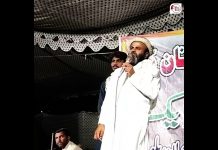
In response, BNP-M chief Sardar Akhtar Mengal issued a video statement urging people to join the strike, calling the suicide attack a “painful and tragic act.”
He asked why the state had failed to respond. “Isn’t the state responsible for this? Wasn’t it the duty of the state to protect these innocent people? What was their fault? They did not pick up a gun. They did not kidnap anyone or engage in corruption. They raised the BNP flag.”
He appealed to all communities in Balochistan, including Baloch, Pashtun and Hazara, to support the strike. “My request to all the people of Balochistan, regardless of whether they are from a certain district or speak a certain language, is to make the strike on 8 September successful,” he said.
Mengal added that the protest “will not affect the rulers” but would show the world that their movement remained alive. “We want the world to know that these criminals, whoever they are and their atrocities, will be exposed. I would like to request the people of every sect of thought to succeed in this protest and prove to the world that the people and protectors of Balochistan are alive.”