









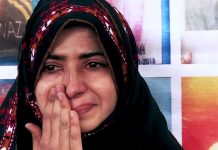
















Amnesty International has called on Pakistan to disclose the fate and whereabouts of Mahjabeen Baloch, a 23-year-old student who was forcibly disappeared from Quetta three months ago, and to put an end to the practice of enforced disappearances.
Amnesty highlighted her case in a series of graphics shared on X on Friday, featuring Mahjabeen’s photograph alongside the words “Where is Mahjabeen Baloch?”.
The global rights organisation said: “Pakistani authorities must put an end to enforced disappearances. They should also disclose Mahjabeen and Younus’ whereabouts and of all those forcibly disappeared.”
Mahjabeen, a student of library science at the University of Balochistan and a person with disabilities, was taken from her hostel at around 3:00am on 29 May by personnel of the Counter-Terrorism Department, according to Amnesty. She has not been heard from since.
Her disappearance came just days after her brother, Younus Baloch, a 25-year-old engineering student at BUETK in Khuzdar, was allegedly detained by army personnel on 24 May. Younus, the father of two daughters, also remains missing.
Amnesty’s campaign underlined the anguish of their family. “Their parents and sister await their return. They have no idea where they are. The state has no answers,” one of the graphics read.
Baloch activists say Mahjabeen’s case reflects a broader trend of targeting women and young students in the region. Dr. Sabiha Baloch, a central leader of the Baloch Yakjehti Committee, said in a post on X: “Imagine a young girl from a small town, living with polio, battling for her life, yet holding onto a dream of higher education… Then, she’s abducted not by criminals, but by the very law enforcement agencies meant to protect her. This isn’t fiction. This is happening in Pakistan. This is what the state is doing to Baloch daughters.”
Paank, the human rights wing of the Baloch National Movement (BNM), also condemned the disappearance of Mahjabeen and her brother Younus, describing it as part of a “state policy to suppress dissent and target students.”
In a statement, the group said their prolonged disappearance had deepened the family’s distress and reflected a wider pattern, with at least 785 cases of enforced disappearance and 121 extrajudicial killings documented in Balochistan so far this year. Paank added that such acts are “violations of Pakistan’s Constitution and international conventions” and urged international pressure to ensure accountability.
The Human Rights Commission of Pakistan (HRCP), in a recent fact-finding report, also warned that enforced disappearances in Balochistan “continue unabated” and that a culture of impunity is deepening alienation and instability in the region.