





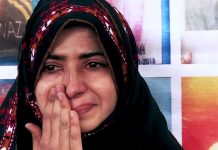


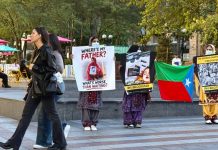
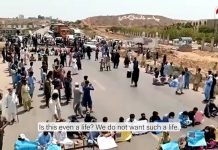
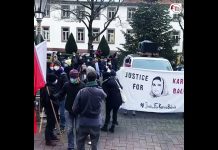



A protest sit-in by Baloch families demanding an end to enforced disappearances, the recovery of forcibly disappeared persons, and the release of Baloch Yakjehti Committee (BYC) leaders entered its 26th consecutive day in Islamabad on Sunday.
The sit-in, taking place outside the National Press Club, has continued despite police barricades and blocked routes. On Sunday, police stopped a rally by the families as they attempted to march from the protest site.
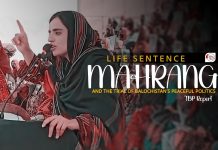
Nadia Baloch, sister of detained BYC leader Dr Mahrang Baloch and one of the organizers of the sit-in, has written an open letter to national and international media urging them to cover the demonstration.
In the letter, she said participants include families of the disappeared who have remained at the sit-in despite harsh weather and government-imposed obstacles. “We are peacefully demanding the release of Mahrang Baloch and other BYC leaders, as well as an end to enforced disappearances in Balochistan,” she wrote.
According to Nadia Baloch, Balochistan has for decades been “deliberately turned into an information black hole” where foreign journalists are denied entry and the voices of the people are silenced before they reach the world.
“Now we are in Pakistan’s capital, visible and ready to speak,” she said. “I appeal to you to come here, talk to the protesters, document our experiences, and take our story to the world.”
She added that for almost three weeks, Pakistan’s mainstream media has either ignored the protest or reported on it in a biased way to divert attention from the real demands. She claimed that roads to the protest site have been blocked with buses and barbed wire to restrict public and media access.
Protesters, she said, have been denied tents or shade despite the intense heat, and face constant surveillance, racial profiling and harassment by unrelated individuals posing as journalists.
Nadia Baloch appealed to both national and international media to visit the protest site, meet the affected families and report on the human rights situation in Balochistan. She said global coverage could “break this silence” and take the demands for justice to the international stage.