











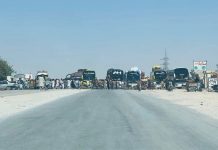














The closure of the Raje border crossing near Nok Kundi in Balochistan’s Chagai district has entered its second month, causing severe economic distress for thousands of residents who depend on cross-border trade with Iranian-administered Western Balochistan.
Authorities had temporarily shut the crossing in the wake of recent tensions between Iran and Israel, citing precautionary security measures. However, despite the situation returning to normal, the crossing remains closed.
Local communities in and around Nok Kundi, who rely heavily on the movement of goods across the border, say the prolonged closure has brought the region’s lower-tier economy to the brink of collapse. Thousands of livelihoods have been disrupted.
Before the closure, Raje served as a key trade route through which diesel and various goods were imported from Iran. Over 4,000 registered vehicles from Chagai district were permitted to operate once a month under a formal system, making it the primary source of income for many families. This limited form of border trade had become the economic backbone of the area.
Since the halt in activity, the impact has been devastating. Mechanics, welding shops, small hotels, and retail businesses have suffered significant losses. Hundreds of daily wage workers have lost their jobs, and many families now face food insecurity.
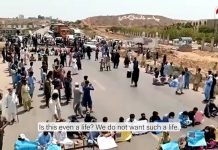
In a recently held grand national jirga in Dalbandin, local residents appealed to the Chief Minister of Balochistan and federal authorities to urgently reopen the Raje crossing. They warned of an unfolding humanitarian crisis if the border remains closed.
Both the public and business communities have reiterated their demand, urging authorities to restore the crossing and allow economic activities to resume, so that the marginalized population of Chagai can regain some sense of stability.