


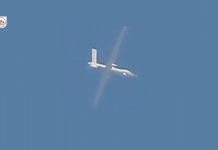

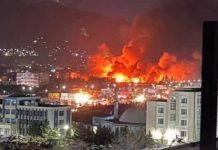


Residents in Zehri tehsil of Khuzdar district, Balochistan, say multiple Pakistani military air and drone strikes have killed civilians, including women and children, amid an ongoing siege that has entered its second month.
In a video shared online, a local resident said his children were killed on 5 October, when gunship helicopters bombed the Moola area as families returned from a funeral.
“We went to attend a funeral; when we returned, Pakistani army helicopters bombed the area and martyred six people, including four children,” he said, sitting beside the bodies. “What wrong did these innocent children do to the state… where were they hiding, in which mountains?”
He rejected official claims that “terrorists” had been targeted, saying the victims were civilians. Local sources said the ongoing operation, involving tanks, artillery, drones, and helicopters, has left at least a dozen people dead, most of them women and children.
A Month of Military Operations
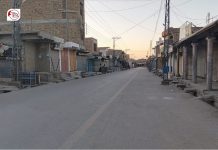
According to the Human Rights Council of Balochistan (HRCB), the siege began in early September after clashes in which Baloch fighters gained control of parts of Zehri. Pakistani forces responded with large-scale operations and imposed an indefinite curfew, cutting communications and isolating entire villages.
HRCB said retaliatory strikes have “disproportionately targeted civilians,” with repeated bombardments over the past month.
On 15 September, three civilians were killed in an airstrike. Two days later, a drone attack near Tarasani killed four people — including two women — and injured five others, among them a four-year-old child.
Ground troops advanced on 27 September, conducting house raids and arrests. Another strike on 1 October in Noorgama killed four civilians near cotton fields, followed by air raids in Moola Pass on 4 and 5 October that killed six members of one family, including four children.
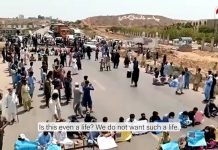
The organization said the curfew has left thousands trapped without food, water, or medicine. “Entire localities remain cut off,” it said. “Hospitals are overwhelmed, and farmers face total crop loss.”
Political Reactions and Condemnation
Akhtar Mengal, former chief minister of Balochistan and head of the Balochistan National Party (BNP), described the situation as “not negligence but cruelty.”
“Children are suffering, crops are destroyed, and families are despairing,” he said. “How long will innocent Baloch lives be sacrificed to the politics of power?”
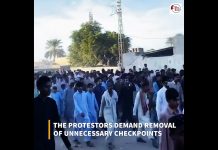
The BNP urged authorities to lift the curfew, provide relief to civilians, and stop what it called the destruction of homes and property.
Dr Sabiha Baloch, a leader of the Baloch Yakjehti Committee (BYC), said Zehri remains “under a severe military siege.”
“All roads are blocked, civilians are trapped, and communication is cut,” she wrote on X. “Drone strikes and raids have killed children and destroyed homes… This collective punishment violates the Geneva Conventions.”
The BYC and Baloch Students Organization Azad (BSO-Azad) condemned what they called “indiscriminate bombings and enforced disappearances,” describing the situation as a “grave humanitarian crisis.”
In a statement, the BYC said: “Indiscriminate operations and aerial bombardments are clear breaches of international principles of human rights.”
The BSO-Azad added that continuous drone strikes and raids had “turned daily life into a nightmare,” calling the campaign “a systematic act of genocide.”
The National Democratic Party (NDP) also condemned the operation, saying Zehri had been “effectively placed under siege.”
A spokesperson said residents were trapped without food, medical care or communication access. “Use of force against civilians in the name of peace or national security cannot be justified,” he said, calling for humanitarian access and transparency about those detained.
The NDP urged that journalists and humanitarian organizations be granted access to verify conditions on the ground and that families of detained or disappeared persons be provided immediate information.
The party said the deaths of women and children during the operation reflected “a continuing pattern of violence against the Baloch people” and called for a political and democratic solution to the crisis. It warned that if the situation in Balochistan is pushed to a “point of no return,” the consequences could soon be felt across the wider region.