









The Balochistan Assembly has passed a new law amending the Anti-Terrorism Act under which certain terrorism-related cases in the province will now be tried under a confidential and specialised judicial system rather than in regular courts.
Under this system, the identities of judges, lawyers, witnesses and other individuals connected to such cases will be concealed, and witnesses will be assigned coded or symbolic names. Proceedings may, when necessary, be held outside court premises, including from prisons or other secure locations, using virtual hearings and electronic means. Voice-altering technology may also be used to protect identities.
The legislation, titled the Anti-Terrorism Balochistan (Amendment) Act 2026, was presented in the Assembly on Wednesday by Zareen Magsi, parliamentary secretary from the Pakistan Muslim League-Nawaz (PML-N). It was approved by a majority of government members, with only one member opposing: Maulana Hidayat-ur-Rehman of the Haq Do Tehreek, also the provincial head of Jamaat-e-Islami. Opposition members from Jamiat Ulema-e-Islam (JUI-F) and the National Party were absent during the vote.
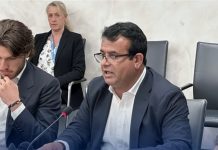
Speaking to journalists, Maulana Hidayat-ur-Rehman criticised the opposition for their absence, saying they had been present in the chief minister’s chamber before the session but did not enter the House.
In his speech, he argued that the law undermines principles of justice and basic human rights. “Now decisions will be announced through WhatsApp. It will be a secret judicial system where neither the lawyer, the judge, nor the witness is known. If someone gives false testimony out of enmity, how will the accused defend themselves?” he said. He added that the 1997 Anti-Terrorism Act had often been used against political activists rather than terrorists, questioning: “Cases were made against us too. Were we terrorists?”
He stressed that harsher laws would not resolve the problem, and that addressing the root causes of militancy in Balochistan was more important.
Chief Minister Sarfraz Bugti rejected the criticism, stating that the new law would not be used against political workers but was strictly for terrorism cases. He said judges, lawyers and witnesses in Balochistan faced serious threats that had long undermined judicial proceedings.
“When terrorists kidnap people to free their accomplices, why would they spare judges, lawyers and witnesses? Should we not provide them with protection? This law is precisely for their safety,” he said. He referred to past incidents, including a grenade attack on a judge’s house in Nasirabad in 2009, after which around 60 terror suspects were acquitted within six days.
Bugti added that extraordinary laws were necessary under Balochistan’s extraordinary circumstances. He noted that countries such as the United States, the United Kingdom and France had also enacted stringent legislation in response to terrorism, sometimes within days of major attacks.
The Chief Minister further said that political parties had previously politicised the issue of enforced disappearances, but the current administration aimed to resolve it permanently through legislation.
The Human Rights Commission of Pakistan’s (HRCP) representative in Balochistan, Habib Tahir Advocate, expressed concerns about the law, arguing it conflicted with constitutional guarantees of a fair trial. “The Constitution provides every citizen the right to a fair trial, but this law restricts that right and is therefore unconstitutional,” he told Urdu News. He added that Pakistan already had detailed criminal codes and procedures in place, and the new law conflicted with these existing frameworks.
He warned that while nobody will oppose punishing terrorists, such legislation carries the risk of misuse. “We have already seen how anti-terrorism laws were used against political parties and activists,” he said.
Key Features of the Law
The new legislation adds Section 21AAA to the Anti-Terrorism Act 1997, titled Special Provisions Regarding the Trial of Certain Cases. It overrides other existing laws.
Under it, the provincial government will establish an authority headed by a Grade-21 officer or equivalent, in consultation with the Chief Justice of the Balochistan High Court. This authority will select cases requiring extraordinary security arrangements, assign them to designated judges, and maintain ongoing coordination with the provincial government. The officer’s identity and appointment details will remain confidential, accessible only to the Chief Justice.
If extraordinary protection is deemed necessary, the Chief Justice will constitute a three-member judicial panel, from which the authority will nominate one judge to hear the case. A panel of five government prosecutors will also be appointed, with one selected for each case.
The identities of judges, prosecutors, defence lawyers, witnesses and others involved will remain concealed. Records will use only official titles or codes, and court orders will be signed under concealed identities. The sealed record will be accessible only to the Chief Justice and the authority.
Proceedings may be conducted through video conferencing, audio or video recordings, or other secure technological means. Hearings will take place in secure premises with restricted access. Where necessary, trials may be conducted via video link from locations outside traditional courtrooms, or from prisons if transporting the accused poses security or logistical challenges.
The provisions also apply to appeals and related proceedings, with confidentiality intended to ensure the safety of all parties.
In June 2025, the provincial assembly had already passed another special anti-terrorism law, allowing detention of suspects and facilitators in terrorism, extortion or kidnapping-for-ransom cases for up to 90 days in holding centres.
On the same day the Assembly approved the latest anti-terrorism legislation, it also passed two other amendments: one concerning forensic science in the province, and another granting the government authority to merge the federally administered Levies with the provincial force and, when necessary, with the police.