


















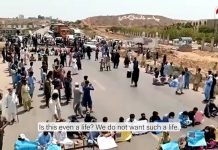





The alleged sexual assault of a woman by a member of a government-backed militia in Khuzdar district of Balochistan has triggered anger and condemnation across the political and social circles.
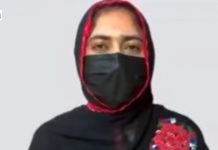
Speaking at a press conference at the Khuzdar Press Club, Sughra Bibi, a resident of Koshk, accused a local “death squad” member, Osama Khidrani, son of Haji Umar, of abducting her and subjecting her to six hours of torture and sexual abuse.
“I am an orphan girl. This is not only my pain but the issue of honor of the Baloch nation. If I do not get justice, I will accept death,” Sughra Bibi told reporters.
Her mother, holding a copy of the Holy Quran during the press conference, appealed for justice: “We are poor people. We have no support. I offer my cry in the court of Allah Almighty. May He do justice against these wrongdoers.”
Relatives present at the press conference said Sughra was abducted while on her way to a tailor with her younger sister and was later released in critical condition. They alleged that the accused, due to his influence and connections, may evade legal consequences.
Local police officials confirmed that a complaint has been lodged and an investigation initiated, though no arrests have yet been made.
The incident has drawn widespread condemnation. Dr. Sabiha Baloch, a leader of the Baloch Yakjehti Committee (BYC), said in a statement that death squads are “not only criminal gangs but beasts in the hands of bigger savages.” She added that these groups are responsible not only for kidnappings, extortion, and drug trafficking but also for the sexual exploitation of women and children.
Dr. Sabiha urged society to rise against such crimes: “Every person whose voice is heard must raise it against these atrocities. God has sent your children into this world as human beings — do not let them become beasts.”
This is not the first such case in Khuzdar. In a previous incident, members of another “death squad” were allegedly linked to former Balochistan Chief Minister Sanaullah Zehri, who abducted a woman. The case sparked widespread protests across the region, though no accountability followed.
Human rights activists and nationalist groups argue that these “death squads” operate with impunity under the protection of state institutions, carrying out abductions, killings, and intimidation of civilians and activists. They warn that without serious action, such crimes will continue to rise.