





















In the lead-up to Pakistan’s national day, the government has implemented stringent security measures, including a night-time ban on public transport, suspension of train services, mobile internet shutdown, and closure of entry and exit points to key cities of Balochistan.
These actions have created a curfew-like atmosphere across Balochistan, with residents experiencing significant difficulties.
Transport Restrictions
According to the transport department, public transport is banned across Balochistan from 5 p.m. to 5 a.m., with authorities warning that companies violating the order will have their route permits revoked. The ban applies to national highways as well as all cities and districts in Balochistan.
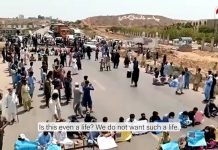
Thousands of people travel daily by public transport between Quetta, Karachi, Makran, and parts of Pakistan. The restrictions have left many stranded. Due to inadequate healthcare facilities in Balochistan, patients who travel to Karachi for treatment are facing serious challenges. Protests have been held against the transport shutdown.
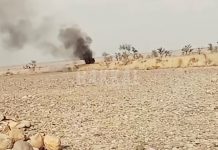
Inter-provincial train services from Quetta remain suspended for the fourth consecutive day, with Pakistan Railways stating that the suspension will continue until 14 August following a bomb attack on the Jaffar Express in Mastung’s Dasht area. In March, the same train was targeted in a hijacking incident claimed by the Baloch Liberation Army, resulting in the deaths of several members of Pakistan’s security forces.
With road and rail travel restricted, many citizens have turned to air travel, causing record fare increases. The fare to Islamabad, normally 18,000 to 20,000 rupees, has risen to over 50,000 rupees. Fly Jinnah operates daily flights, Pakistan International Airlines three to four times a week, and Serene Air once a week.
Mobile Internet Shutdown
Since 6 August, 3G and 4G mobile internet services have been shut down in all 36 districts of Balochistan, with the blackout expected to continue until 31 August. Balochistan already has the weakest online infrastructure in the country, with 60 per cent of the area lacking internet access. Over half of its estimated 15 million residents rely solely on mobile data, while fixed-line internet users number only around 70,000.
The shutdown has affected freelancers, people running online businesses, food delivery riders, students, and traders. Mobile banking and online payment systems have stopped functioning, while telemedicine services have also been halted.
The Human Rights Commission of Balochistan has condemned the measures, calling them a serious violation of civil liberties and fundamental rights. In Mastung district, banking services have also been suspended, leaving residents in difficulty.
Gwadar in Complete Lockdown
In the port city of Gwadar, all entry and exit points have been closed for the past three days due to security concerns and preparations for Pakistan’s national day events. Streets are deserted, traffic is minimal, and residents are confined to their homes.
Attacks Continue Despite Restrictions
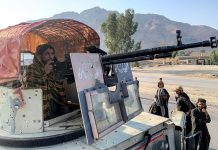
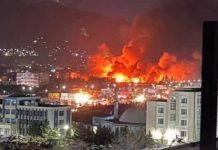
Despite the suspension of transport, internet, and banking services, armed attacks have continued in various parts of Balochistan. Targets have included Pakistan’s security forces, police, alleged government-backed local armed groups(death squads), communication systems, and railway services.
In the Washuk district’s Basima area, an attack yesterday killed a Pakistan Army captain along with eight other personnel and injured six. In Quetta, police and government offices have been targeted in bomb attacks.
In Ziarat, armed men abducted the deputy commissioner along with his son, while in Zehri, Pakistani forces engaged in operations also came under multiple attacks.
Public and Civil Society Criticism
Residents and human rights activists argue that the government is punishing the public by restricting essential services instead of providing security. They say the measures are confining and paralysing citizens rather than protecting them.