

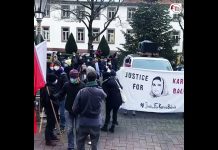
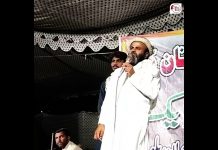


Around 400 people gathered today in Frankfurt for the second annual commemoration of internationalists who gave their lives in the Kurdish freedom movement. Organised by a joint committee of Kurdish and internationalist groups in Germany, the event honoured the memory of fallen fighters from across the world who joined the Kurdish revolution, particularly in Rojava and other regions of Kurdistan.
Held in a solemnly decorated hall, the ceremony featured moving speeches, cultural performances, and musical tributes, underscoring both grief and admiration for those who sacrificed their lives in the struggle for freedom and justice.
Families Honoured from Across the Globe
The event opened with heartfelt greetings from the families of the fallen, whose presence lent a deeply emotional tone to the proceedings. Relatives of fallen internationalists from Turkey, Germany, Australia, the Netherlands, Canada, Argentina, the UK, and Slovenia were individually named and welcomed, prompting the entire hall to rise in a standing ovation.
Among them were the families of Asya Kanîreş (Turkey), Azad Şergeş (Germany), Bagok Serhed (Australia), Baran Sason (Netherlands), Andok Cotkar (Germany), Avaşîn Tekoşîn Güneş (Germany), Gabar Rojava (Canada), Şîyar Gabar (Germany), Lêgerîn Çîya (Argentina), Şoreş Amanos (UK), and Rodî Çedar (Slovenia). A close friend also represented the fallen fighter Nûdem from Germany.
A Legacy Beyond Borders
The organisers emphasised that the Kurdish freedom movement has, since its inception, inspired people far beyond the Middle East. In the face of threats from the so-called Islamic State (IS) and ongoing military aggression from Turkey, many internationalists chose to join the Kurdish cause in what they saw as a universal fight for humanity.
“The revolution in Kurdistan represents values that transcend borders — equality, freedom, and dignity,” one organiser remarked. The event marked this shared commitment with a moment of silence in memory of all fallen fighters.
Remembering All Victims of Injustice
In keeping with the internationalist spirit of the gathering, the names of Günther Sare — killed by German police in 1985 during an anti-fascist protest — and Christy Schwundeck — shot by police in 2011 in Frankfurt — were also commemorated. The message: the fight against injustice is global and unceasing.
Ten Years Since the Liberation of Kobanê
2025 also marks the tenth anniversary of the liberation of Kobanê, a key turning point in the battle against IS. Sefkan Kobanê, a former commander of the People’s Defense Units (YPG), addressed the gathering as the first speaker. He highlighted the role of fallen internationalists and reaffirmed the revolutionary commitment to building an ecological, gender-equal, and democratic society — a vision inspired by Kurdish leader Abdullah Öcalan.
Speaking directly to the families of the fallen, he said: “Your children did not die in vain. Under the leadership of women, we will build the society they dreamed of.”
Culture as Resistance
A recorded puppet theatre performance by feminist groups including “Fight Together!”, “Women Defend Rojava,” and Astare Art powerfully depicted the destruction wrought by capitalist patriarchy. Through quotations from the fallen, the performance honoured those “who loved life so much they gave their own for it.”
The Internationalist Young Women’s Movement added that today’s youth are rejecting the consumerist escape offered by modern society and instead turning towards meaningful collective resistance. “They gave their lives, but not their dreams,” a representative said.
Musical Tributes and Deep Reflections
The emotional high point came with a musical performance by Christa Spies, mother of Azad Şergeş, who sang “Tell Me Where the Flowers Are” — a plea for reflection and peace. This was followed by revolutionary songs performed by a multilingual choir, organised by Initiative Democratic Confederalism and youth and feminist collectives.
Later, Patricia Gregorini — mother of Lêgerîn Çîya (Alina Sanchez) from Argentina — delivered a deeply personal speech. Her daughter had studied medicine in Cuba before deciding to join the revolution in Kurdistan. “I didn’t choose the place — the place chose me,” Alina had told her. “She is still present,” Gregorini concluded tearfully. “I feel it — she is alive here.”
Universal Mothers, Universal Struggle
Representing the Kurdish women’s movement in Europe, Pero Dündar stressed the shared emotional and political force among mothers around the world. “They embody the same essence everywhere,” she said. “This unity of pain, love, and struggle is the heart of true internationalism.”
A moving video montage followed, showing images of the international fallen accompanied by music, culminating in the audience standing together and shouting the Kurdish phrase, Şehîd namirin — “The fallen are immortal.”
A Message of Protest and Hope
The parents of German fighter Andok Cotkar (Konstantin Gedig) spoke last. Despite the Turkish state withholding their son’s remains, they shared a message of dignity and hope. “Andok joined the struggle because of his deeply human convictions,” said his mother, Ute Gedig. Quoting Holocaust survivor Elie Wiesel, she added, “There may be times when we are powerless to prevent injustice, but there must never be a time when we do not protest.”
YPJ: “Our Hearts Beat Together for Freedom”
A final video message from a representative of the Women’s Defense Units (YPJ), on behalf of the Syrian Democratic Forces (QSD), honoured all internationalist martyrs. She noted that their sacrifices demonstrate the universal nature of the struggle for freedom: “Wherever we are and wherever we come from — our hearts beat together for freedom.”
As the event concluded, attendees expressed their collective grief, pride, and unity. The message was clear: though the fallen are no longer physically present, their dreams and ideals live on in a global movement striving for justice, freedom, and peace.