













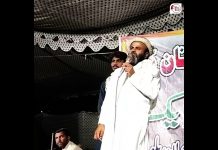


The Baloch Students Action Committee (BSAC) held a press conference in Quetta to highlight the severe education crisis in Balochistan, revealing alarming statistics collected over four years through its Baloch Literacy Campaign.
According to BSAC leaders, more than 70% of schools across Balochistan are completely non-functional, while literacy rates have dropped to below 40%. The data was presented during a detailed briefing conference held at the Quetta Press Club.
BSAC leaders said that Balochistan has faced numerous challenges for the past seven decades, including political, social, and economic issues, despite being rich in natural resources. They stated that while official narratives often paint a positive image of development, the reality on the ground remains dire. The leaders said that in remote parts of Balochistan, basic survival remains a daily struggle.
The Baloch Literacy Campaign was initially launched during BSAC’s second council session with the aim of raising awareness about education among the Baloch population. However, when BSAC members began visiting different areas of Balochistan, they found conditions worse than expected.
“The narrative that Baloch people do not prioritize education because of tribal traditions is no longer valid,” BSAC leaders said. “When our members traveled to promote education, they found that there are hardly any functioning schools in many areas. Schools exist only as ghost structures.”
The BSAC said that this situation led them to collect comprehensive data on schools in Balochistan, including visiting sites, photographing conditions, and gathering public opinions. This effort has been ongoing for the past four years.
Through the campaign, BSAC surveyed hundreds of schools across Baloch-majority areas, from Lyari in Karachi to Koh-e-Suleman, and from Dera Bugti to Awaran. According to the findings, over 70% of schools in these areas are completely closed, while the remaining 30% are only nominally operational. Of the schools that are open, 95% lack basic facilities such as clean drinking water, electricity, boundary walls, washrooms, and textbooks.
BSAC also referenced the findings of the recent Pakistan Economic Survey, which reports that Balochistan’s literacy rate has dropped to 42%, with 70% of children out of school. For girls, the situation is even worse: 8 out of 10 girls are unable to attend school.
During the conference, BSAC presented evidence of over 250 non-functional schools through videos, photographs, and documents displayed in the conference hall. They also presented a detailed report on the literacy campaign, including its objectives, methods, and findings.
BSAC leaders said that without primary, middle, and secondary schools functioning properly, it is impossible to improve the education system. They criticized the government for repeatedly claiming to allocate billions of rupees for education in the annual fiscal budget while the actual state of education continues to decline.
They pointed out several specific issues contributing to the education crisis:
- Ghost schools with no teachers or students
- Declining enrollment rates
- Severe shortage of teachers
- Widespread absenteeism among both teachers and students
- Lack of serious action from the government to address these problems
BSAC said that rather than fixing these issues, successive governments have used education funding for corruption and self-interest.
In addition to primary education, BSAC has also worked on higher education issues through its Higher Education Campaign. Under this campaign, the organization has demanded the establishment of new university campuses in areas like Naseerabad, Rakhshan Division, and Wadh. They also highlighted problems at existing institutions like BUITEMS and the University of Balochistan.
BSAC leaders alleged severe financial mismanagement and corruption in Balochistan’s largest educational institutions, especially the University of Balochistan. They claimed that the university remains closed for half the academic year due to financial crises, leaving students’ education in limbo.
According to BSAC, there is widespread corruption in the university’s examination and admission branches. They alleged that students must pay bribes for results and admissions, and that scholarship funds are kept in bank accounts to collect interest.
They also claimed that more than 70% of faculty members and students do not regularly attend classes, but authorities take no action. Meanwhile, tens of millions of rupees are spent on security infrastructure instead of educational improvements. BSAC questioned whether increased security leads to better education outcomes, stating that academic environments are becoming more like prisons.
BSAC presented a regional breakdown of the crisis, identifying the following areas as the most affected by school closures:
- Naseerabad region: Most schools are either shut down or used as private meeting spaces by local elites.
- Dera Bugti region: Comes second in terms of non-functional schools.
- Awaran: Ranks third.
- Panjgur and Lasbela: Also have large numbers of closed schools.
BSAC leaders criticized the narrative that “tribal backwardness” or “nationalist politics” are the reasons for educational decline, arguing that the worst-hit areas are actually those politically aligned with Islamabad.
They pointed out that while government officials boast about sending students abroad for higher education, the children of ordinary shepherds in Balochistan do not even have access to a mat to sit on in school.
During the press conference, BSAC called on the Baloch people to take grassroots action by establishing tuition centers and libraries in their communities and by holding absentee teachers accountable through traditional social practices.
BSAC also urged citizens to document the conditions of their local schools and send the data to the organization’s literacy committee.
They presented the following demands to the government:
- Reopen the 70% of schools that are currently non-functional
- Take disciplinary action against absent teachers
- Fill vacant teaching positions
- Provide basic facilities in schools, including textbooks, boundary walls, electricity, water, and transportation
- Stop over-securitization of higher education institutions and end profiling and harassment of students
- Establish research centers, ensure administrative transparency, provide scholarships, and create a free academic environment in universities
BSAC concluded the conference by stressing that these issues must be addressed urgently to prevent the complete collapse of Balochistan’s education system.