




















Chairman of the Baloch National Movement (BNM), Dr. Naseem Baloch, has stressed that national liberation movements cannot succeed through slogans or emotional responses alone, but must be grounded in political maturity, intellectual growth, and consistent international engagement. He made these remarks during an online training session titled “The Changing World Order and Balochistan”, organized by BNM’s Capacity Building Department and hosted by the party’s Germany chapter.
The event aimed to strengthen the political, intellectual, and strategic understanding of party workers in the context of evolving global and regional developments.
Dr. Baloch stated that a successful national movement in the current era must undergo continuous intellectual and practical evolution, and prepare its leadership and members in line with the shifting global landscape. He emphasized that a politically effective movement is one that makes consistent progress in both political and diplomatic arenas.
He underlined the importance of remaining firm on core principles, calling it the real strength of any national struggle. “If we remain steadfast in our position, the world will be compelled to listen and understand us,” he said. According to him, seriousness, maturity, and consistency are essential qualities for a movement to make an impact at the regional and international level.
Discussing current global tensions, Dr. Baloch referenced ongoing conflicts such as the Iran-Israel crisis and the India-Pakistan standoff, stating that these have already reached Balochistan’s borders. He stressed that only thorough preparation in such a scenario could guarantee the success of their political cause.
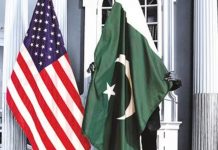
He also analyzed the role of the United States in both conflicts, arguing that international politics revolves around strategic interests rather than ethical principles. Referring to Pakistan’s involvement in the Iran conflict, he claimed that the country had long served as a client state in the region. He alleged that Pakistan’s army chief was called to the U.S. to align with Western interests in the Iran-Israel conflict, highlighting what he called Pakistan’s “subservience” to Western geopolitical agendas.
Dr. Baloch provided a detailed overview of the Middle East crisis and also examined the Russia-Ukraine conflict, which he said has now become a growing concern for Europe. Citing examples from some European countries, he mentioned an increasing trend of constructing bunkers for civilian protection in times of conflict, interpreting this as a sign of how deeply the threat is being felt throughout Europe.
He urged Baloch political workers and leadership to study global and regional developments in detail and to expand their political insight, which he described as essential for effective decision-making.
Praising the efforts of party members, Dr. Baloch said that BNM’s workers have played a critical role in energizing the party through their activism. He especially acknowledged the tireless work of members abroad and noted that the organization’s diplomatic activities have gained momentum in recent years, resulting in important developments.
However, he cautioned against premature celebration, saying that simply meeting with European institutions or mentioning Balochistan at international forums does not constitute success. “Real success lies in convincing international institutions, the European Union, and global media to recognize the Baloch national issue as one of genocide and to extend political and humanitarian support. This can only be achieved through sustained, organized, and strategic political and diplomatic efforts,” he said.
Dr. Baloch gave several examples from international politics to support his point. He cited how the U.S. once labeled certain Syrian groups as “terrorists,” only to later hand the governance of Syria over to the same factions. Similarly, he pointed to the case of the Kurds, who were heavily supported militarily by the U.S. against ISIS, but were later abandoned. He also referenced the former enmity between Russia and the Afghan mujahideen, who today, he said, are recognized by the same powers. “This shows that states act based on interest, not principles,” he noted.
He concluded by urging the Baloch nation to clearly define its national interests and strategic direction, so that the struggle for freedom, identity, and fundamental rights could advance effectively. “The world only recognizes those nations that take their movements seriously, organize themselves, and prove their commitment on the ground,” he said. “For this, consistent struggle based on political principles is the only way forward.”