















A wave of coordinated attacks has been reported across Balochistan after the Balochistan Liberation Front (BLF) announced the launch of a new armed campaign named “Operation Baam.”
In a statement released Wednesday night, BLF spokesperson Major Gwahram Baloch said the operation marks the beginning of “a new dawn in the Baloch national liberation war.” The word Baam in the Balochi language means “dawn” or “sunrise.”
“From the coastal region of Balochistan to the mountains of Koh-e-Sulaiman, the Balochistan Liberation Front has launched Operation Baam. Under this operation, coordinated and multifaceted attacks are being carried out against the enemy,” the spokesperson said. The group added that detailed information would be released upon the operation’s conclusion.
Since the announcement, more than 50 attacks have been reported within a span of 24 hours across numerous districts, including Kech, Kharan, Khuzdar, Kalat, Panjgur, Washuk, Musakhel, Sibi, Mastung, Naseerabad, Quetta, Chagai, and Dera Bugti.
In Mekhtar, near Musakhel, armed men reportedly established a checkpoint near Sar Daki and intercepted a passenger bus travelling from Quetta to Punjab. According to local sources, twelve passengers were taken off the vehicle and later executed. The deceased were reportedly from Punjab.
In Panjgur’s Qalam Chowk area, a checkpoint belonging to Pakistani forces was attacked around 11:00 AM. In Kharan, three consecutive assaults were reported, including on a Military Intelligence office, a Frontier Corps checkpoint along Gwash Road, and a separate security convoy.
In Sibi, police and military checkpoints near Karmo Wadh, Dosa Lashari, and the toll plaza were targeted. In the Jhao region, armed attacks were reported in Nowndrah Kolanj, Gazi, Darukocha, and Doleji, including on military camps and Ufone mobile towers.
In Kech district, multiple areas including Mand, Sari Gadgi, Bal Negor, Nyami Kalag, Jusak, and Tump saw attacks on security camps and checkpoints. Mortar shells were fired in several of these locations.
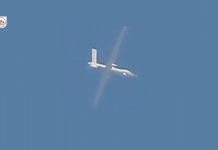
Mortar shells were also fired at a Pakistani military camp in the Gwarkop area of Kech, with several projectiles reportedly landing inside the compound. In Kolwah, armed fighters launched a major assault on a military camp, reportedly destroying surveillance drones, quadcopters, and security cameras.
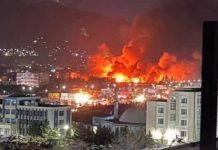
In Buleda, Kech district, over twenty armed individuals on motorcycles reportedly surrounded the United Bank Limited branch in the Minaz region, evacuated staff, and then set the building ablaze. The structure was completely destroyed, along with all furniture, cash, and records.
Additional attacks targeted a military post in Tejaban and police positions in the Sasoli and Lohi areas of Naseerabad and Sohbatpur districts.
In Kalat, attacks were reported in Kapoto, Tok, Marjan, Mangochar, and Dasht Goran. Mobile communication towers were set ablaze, and armed clashes occurred near checkpoints.
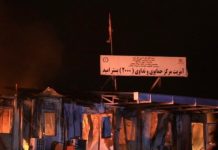
In Washuk, armed fighters reportedly seized control of a Levies checkpoint, torched vehicles, and burned down two rooms at the site. Fighters also launched road blockades and set fuel tankers on fire.
In Khuzdar’s Wadh Palimas and Darkala areas, attacks were launched on a central military camp and on vehicles transporting minerals. In Dalbandin, vehicles carrying gas were ambushed, resulting in damage and disruption.
In Quetta, security checkpoints in Sona Khan, Hazar Ganji, and Kirani Road came under fire. In nearby Mastung district, attacks were reported on checkposts and a government secretariat bus.
Security officials said drones and surveillance equipment used by Pakistani forces were targeted and destroyed in several areas. Local authorities confirmed casualties and financial damages across multiple districts.
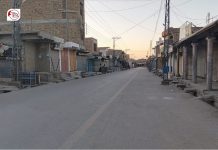
As of late Thursday, road blockades, snap checkpoints, and restricted movement continue in many parts of the region.
The Balochistan provincial government acknowledged the wave of attacks and said that security operations are underway in response. However, independent observers suggest that the sheer scale and coordination of the assaults are becoming increasingly difficult for authorities to control, reflecting a significant evolution in the operational capabilities of Baloch armed groups. These groups appear to be shifting from traditional guerrilla tactics toward more organized and territorial forms of control.
It is worth noting that the pattern of simultaneous, multi-target operations bears resemblance to “Operation Herof,” a multiphase military campaign launched by the Baloch Liberation Army (BLA) in August 2024. In the first phase of that operation, the BLA reportedly killed more than 130 Pakistani soldiers and seized control of major highways and installations, including a 20-hour occupation of a military base in Bela.
Defence observers described “Operation Herof” as the most extensive and coordinated assault in the history of the Baloch insurgency. During the operation, BLA fighters maintained control of roads stretching from Makuran to the Koh-e-Sulaiman range.
The continuation of organized and lethal attacks across Balochistan highlights the rising military capabilities of Baloch armed groups. Their expanding operational footprint presents a serious challenge to the Pakistani military and raises broader security concerns for international commercial interests operating in the region.