













According to sources, the Counter-Terrorism Department (CTD) of Balochistan Police continues to refuse to hand over the bodies of slain Baloch fighters to their families, five days after a deadly clash with the Pakistan Army in Barkhan district.
Disheartened by the authorities’ refusal, the families submitted a formal request to the local magistrate on Wednesday, demanding that the bodies be handed over in accordance with legal and traditional practices, so that proper burials may take place.
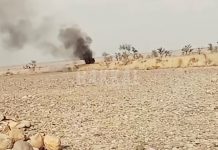
The incident occurred on 6 June in the Rakhni area of Barkhan, where a confrontation between Baloch fighters and the Pakistan Army, reportedly alongside allied death squads, resulted in the deaths of four individuals: Mustafa Noor (Tasp, Panjgur), Samiullah (Malai Bazaar, Turbat), Rasan Qadir (Labach Dansar, Awaran), and Shahzaib (Guni Girishk). Their bodies were subsequently moved from Rakhni to Civil Hospital Quetta.
Relatives of the deceased assert that the state is both legally and morally obliged to release the bodies after proper identification and familial verification.
In recent times, however, Pakistani forces have made the return of Baloch fighters’ bodies to their families increasingly difficult. Families allege that not only are bodies being withheld, but there have been consistent reports of desecration. Iconic figures such as Shaheed Ghulam Mohammad and Shaheed Banuk Karima Baloch have had their graves vandalised, and there are unofficial restrictions on visiting or maintaining the graves of Baloch martyrs.
Local residents suggest the Pakistani military is alarmed by the widespread public support for the Baloch national movement. They claim that the state wishes to prevent the public recognition of Baloch martyrs, who are often buried with national honours. According to them, the graves have become potent symbols of resistance against what they term Pakistan’s occupation of Balochistan.
This is not the first incident of its kind. Human rights organisations have consistently condemned the state’s refusal to return the bodies of deceased individuals, calling it a blatant violation of fundamental human rights.
International law also mandates respectful treatment of the dead. Under the Geneva Conventions, parties to a conflict are obligated to return bodies to their families as promptly as possible and treat the deceased with dignity. Concealing or delaying the handover of corpses is considered a grave breach of international humanitarian norms.
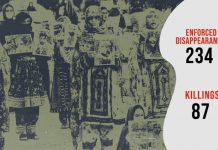
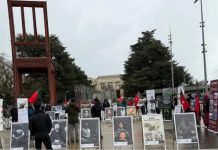
Meanwhile, the protest camp led by Voice for Baloch Missing Persons (VBMP) outside the Quetta Press Club marked its 5,848th day. The longstanding hunger strike highlights the issue of enforced disappearances in Balochistan.
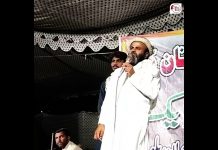
On this occasion, VBMP Vice Chairman Mama Qadeer Baloch stated that enforced disappearances and collective punishment in Balochistan are on the rise. He expressed grave concern over the emerging trend of refusing to return the bodies of individuals killed in armed clashes and burying them without proper identification, calling it an alarming addition to the list of human rights violations in the region.
“There is no real existence of law and justice in Balochistan,” said Mama Qadeer.