





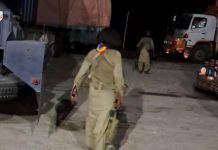

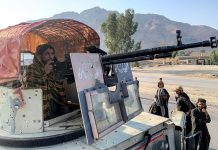
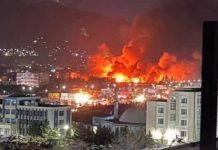
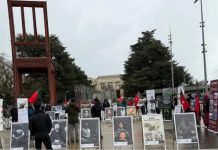




The Baloch Liberation Army (BLA) has claimed responsibility for more than 71 coordinated attacks across 51 locations in Balochistan, describing them as military exercises in preparation for the next phase of its campaign, “Operation Herof.”
In a statement issued on Sunday, BLA spokesperson Jeeyand Baloch said the operations aimed to test “military coordination, ground control and defensive positions,” and strengthen the group’s readiness for future “organized war.”
The group said its targets included military convoys, checkpoints, intelligence agencies, mineral transport vehicles, and members of state-backed militias.
What is Operation Herof?
“Operation Herof” was launched in August 2024 as part of what the BLA calls a decades-long resistance campaign against Pakistan’s control over Balochistan. The group has described it as a multiphase effort to “reclaim Balochistan.”
In its first phase, the BLA claimed to have killed more than 130 Pakistani military personnel and seized control of major highways and installations, including a 20-hour occupation of a military base in Bela.
Defense analysts described the operation as the largest coordinated armed action in the history of Baloch resistance, during which the BLA maintained control over roads from Makuran to Koh-e-Sulaiman.
Takeovers and Ambushes
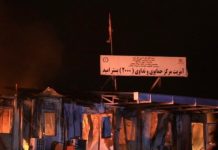
In the latest phase of preparations for the “Operation Herof,” The BLA said its fighters captured the Hoshab area of Kech district, seized the Levies station and NADRA office, and set both buildings on fire after collecting weapons and equipment.
Fourteen individuals from Sindh were detained and later released. Pakistani forces that attempted to advance at Hoshab Zero Point reportedly came under fire and suffered “heavy casualties.”
In Washbod, Panjgur district, BLA fighters arrested two police personnel and confiscated seven Kalashnikovs, seven pistols, two G-3 rifles, and two grenade launchers before setting fire to two vehicles.
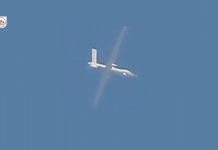
In Panjgur’s Bonistan, the group said it controlled the area for over four hours and ambushed a military convoy in nearby Majboorabad, killing 14 personnel and destroying three vehicles, including a surveillance drone.
Additional road blockades were reported in Rakhshan and Goran areas of Panjgur, where BLA fighters set one mineral transport truck ablaze and damaged two others.
In Nushki’s Ahmedwal area, the group said it controlled the area for over four hours, set up road checkpoints, seized the railway station and Levies post, and arrested four individuals currently under interrogation.
Operations in Kalat and Mastung
In Kalat, BLA fighters reportedly attacked a major Pakistani military camp in Garap, killing five soldiers and injuring three. In Mangochar, five more soldiers were allegedly killed in an ambush, and a separate grenade launcher attack targeted troops camped inside a college.
In Mastung’s Dasht Tera Mile, the group claimed it blocked the N-65 highway for four hours and attacked a military post with rockets and automatic weapons, killing at least three soldiers. A convoy sent to reinforce the post was ambushed, and after prolonged clashes, Pakistani forces reportedly retreated.
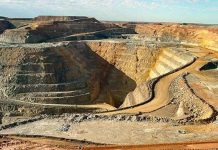
In Khadkocha, the BLA said it damaged six trucks carrying chromite and other minerals.
Urban Assaults and Additional Blockades
The group said it conducted grenade and rocket attacks at 14 locations in Quetta, targeting police stations and army posts, including the Shahbaz Town headquarters, Captain Safar Khan checkpoint, Hazara Town post, and ANF camp at Burma Hotel. Four personnel were reportedly killed and 11 injured.
Two alleged informants were “neutralised” in Lasbela. They were identified as Muhammad Asghar of Bahawalpur and Muhammad Ishaq of Rahim Yar Khan. The BLA said they were sentenced to death based on intelligence from its wing “ZIRAB.”
In Turbat, seven attacks were reported, including a blockade of the M-8 highway at Kanchiti Cross and attacks on military outposts in Dehat, Gahna, Nasirabad, Heerabad, Meerabad, and Jadgal Dun.
In Tump, BLA fighters ambushed troops in Kohar, killing two, and launched attacks in Buleda and Gili, killing at least three more. In Zamuran, two sniper attacks in Tolangi and Kuluki reportedly killed two personnel. An IED blast in Jabshan killed two others fetching water from outside a post.
The BLA claimed responsibility for grenade attacks on police stations in Bolan, Bhag, and Dhadar. Blockades were also reported in Sohbatpur, Dera Murad Jamali, and Nootal. In Sibi, three coal-carrying trucks were targeted; one was set on fire.
“These coordinated, systematic, and decisive attacks… not only caused casualties and property losses to the enemy but also served as military exercises for Operation Herof 2.0,” the BLA said.
No official statement has yet been issued by the Pakistani military regarding the scale or impact of the attacks.