







The Baloch Liberation Army (BLA) said on Sunday that attacks under the second phase of “Operation Herof” had continued for more than 40 hours across multiple districts of Balochistan, as the group released a video of a female “fidayeen” it said was killed in clashes with Pakistani forces in Gwadar.
In a statement sent to the media, BLA spokesperson Jeeyand Baloch said the group’s fighters had “achieved designated objectives” in Kharan, Mastung, Dalbandin, Tump and Pasni and had returned to “secure locations,” while clashes continued in other areas where “completion of operations has not been announced.”
The BLA claimed that “over 200” personnel of the Pakistani army, police and Frontier Corps had been killed and that 17 had been captured. It said 18 BLA fighters had been killed, including 11 “fidayeen“ of the Majeed Brigade, four members of the Fateh Squad and three from STOS.
“These are conservative figures, whereas the overall casualties and property losses of the enemy are far greater. Complete details of the enemy’s losses will be released to the media at an appropriate time after compilation,” the statement said.
The group appealed to the public to “remain cautious” and maintain distance from Pakistani forces, urging residents to continue supporting its fighters in areas where operations were still under way.
BLA Releases Video of Female Fighter
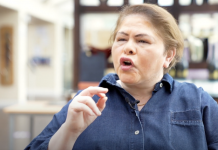
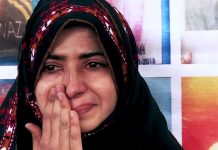
Through its official media channel Hakkal, the BLA released a video recorded during clashes in Gwadar, identifying a female “fidayeen” fighter it said was killed in attacks against Pakistani forces.
The group identified her as Hawa Baloch alias Droshum, saying the recording was her “final message, sent twelve hours before her martyrdom.”
Sources told The Balochistan Post that Hawa Baloch was a writer and that her father had also been associated with the Baloch armed movement and was killed in fighting years earlier.
In the video, Hawa Baloch urges Baloch women to join what she described as the armed resistance, saying the Pakistani state had “oppressed Baloch women as well as men.”
She said Baloch women were “neither intellectually nor practically weak” and that the time had come for them to “rise and seek justice.”
The BLA also released a separate video featuring “fidayeen” Nako Fazal Baloch, who the group says is the “eldest Baloch fidayee of the Baloch Liberation Army.”
In the recording, Nako Fazal Baloch is seen seated inside a vehicle that the group claims was used to target a site in Pasni tehsil of Gwadar district, marking the beginning of “Operation Herof” Phase Two.
In his message, he salutes the Baloch nation and says, “First of all, long live the Majeed Brigade. Our youth, God willing, are conscious and aware.” He then addresses elders, saying it is no longer “a time to remain at home,” and urges them to join their “children and brothers” and participate in the armed resistance.
Reports of Continued Clashes in Gwadar, Nushki and Other Districts
Local sources said coordinated attacks launched on Saturday morning continued on Sunday night in Gwadar, Nushki and parts of Quetta.
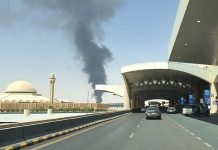
In Gwadar, gunfire and explosions near the port area intensified throughout the day.
Residents said armed individuals had entered sections of the port and targeted Chinese-linked projects. Multiple explosions were reported inside the port, and clashes have continued for several hours.
Heavy fighting was also reported near Frontier Corps installations and government offices in Nushki throughout Sunday.
Earlier, the BLA circulated an audio message attributed to a fighter involved in the Nushki attacks.
The fighter claimed the group had maintained control of the district since Saturday morning, saying members of the Majeed Brigade had advanced “from all sides,” while the Fateh Squad was providing cover.
The audio alleged that personnel from the Pakistani army, the Counter-Terrorism Department (CTD), the central jail and several government offices had been killed.
It also claimed that two vehicles bringing reinforcements from Quetta were destroyed and that 13 personnel arriving from Kharan were killed at Bab-e-Kharan.
According to the fighter, helicopters arrived early Sunday but withdrew after being fired upon. The message concluded with the claim that “the area is completely under our control.”
Emergency Declared in Hospitals
An emergency was imposed in all government hospitals across Balochistan on the directives of Health Minister Bakht Muhammad Kakar and Health Secretary Mujeebur Rehman.
Kakar was supervising the provision of treatment to those “injured in the Quetta firing,” a statement from the health department said.
Operating theatres at the Quetta Trauma Centre and Civil Hospital were placed on alert, and additional medical staff were deployed.
Roads to Balochistan Closed; Train Services Suspended
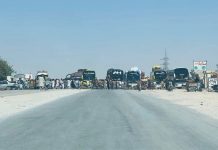
Authorities in Punjab’s Dera Ghazi Khan district closed all routes leading into Balochistan, citing the prevailing security situation.
The Fort Munro Highway and the Taunsa–Musa Khel Road were shut, and vehicles were turned back from the Bawata and Sakhi Sarwar border points.
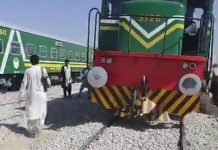
Train services from Quetta to other parts of the country remained suspended for a second consecutive day. The Jaffar Express to Peshawar and the passenger service to Chaman did not depart, according to railway officials.
Ban on Gatherings and Face Coverings
In the wake of the attacks, the Balochistan government imposed a one-month ban on gatherings, processions and sit-ins of five or more people across the region.
A Home Department order also prohibited covering one’s face in public — including with masks, mufflers or any other cloth that hinders identification.
The display or use of weapons, pillion riding, tinted vehicle glass and unregistered vehicles was also banned.
The restrictions were imposed under Section 144 of the Code of Criminal Procedure.