






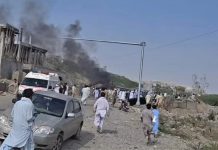


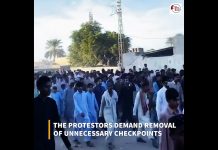


The Human Rights Commission of Pakistan (HRCP) has expressed “grave concern” over reports of civilian killings and indiscriminate bombardments during ongoing military operations in Zehri tehsil of Balochistan’s Khuzdar district.
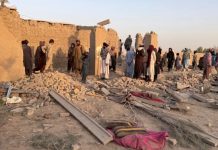
In a statement posted on X, the HRCP said several civilians, including children, were killed when a wedding ceremony came under attack.
“Local sources also indicate that the movement of people has been severely restricted, with several towns now effectively declared no-go areas,” the Commission said.
The HRCP called on the federal and provincial governments to launch “an immediate, transparent and independent inquiry” into such incidents causing loss of civilian life.
“Journalists and neutral observers must also be allowed to visit the affected areas to verify the facts,” it added.
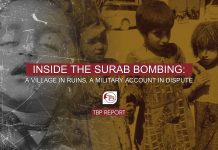
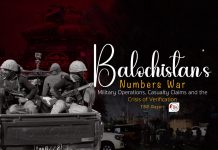
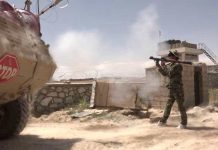
Zehri has been under continuous military siege since mid-September, when Pakistani forces launched large-scale ground and aerial operations aimed at eliminating the presence of Baloch “pro-independence” groups.
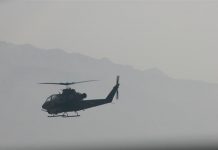
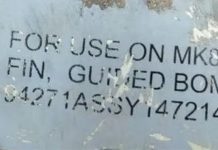
Local sources said the operations have involved tanks, artillery, drones, and helicopters, resulting in dozens of civilian deaths and widespread destruction.
According to eyewitness accounts, the most recent attack took place on 5 October in the Moola Pass area, where six people — including four children — were killed in a drone and helicopter strike. The victims were identified as Manzoor Ahmed, his two sons, a nephew, and Bibi Raheema along with her child. Two other children were injured.
In a video shared online, a resident described the strike:
“We went to attend a funeral; when we returned, Pakistani army helicopters bombed the area and martyred six people, including four children,” he said, sitting beside the bodies. “What wrong did these innocent children do to the state… where were they hiding, in which mountains?”
Related: Zehri Under Military Siege: Civilians Killed in Airstrikes, Families Trapped Under Curfew
Earlier, on 15 September, three members of the Pandarani tribe were killed in an airstrike on their home, and on 17 September, another drone attack near Tarasani killed four people, including two women, and injured five others, among them a four-year-old child.
Large parts of Zehri remain under strict curfew, with heavy troop deployment and communication networks completely cut off.
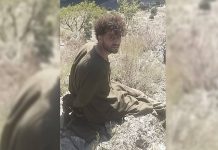
Dozens of residents have been arrested, and others reportedly taken to undisclosed locations.
Markets in Zehri have been closed for weeks, and the town’s only hospital is under military control. Locals said a pregnant woman died after being unable to reach medical care, while others continue to face severe shortages of food, water, and medicine.
Residents said the prolonged military blockade has created a humanitarian crisis, leaving thousands trapped in their homes without aid or communication.
Analysts say the escalation in Zehri highlights a broader pattern of operations being carried out without transparency or civilian protection mechanisms, deepening mistrust between the state and the local population.
They urged the government to end collective punishment, ensure accountability, and allow independent observers to access the region and assess the situation on the ground.