










By Dostjan Noor
Balochistan, the biggest province of Pakistan by land and most resource-rich, remains its most marginalized, most silenced, and most bruised province. Decades have passed, and the inhabitants of this earth continue to live in an irony: they tread on a ground full of copper, gold, and gas, but they go without clean drinking water, proper healthcare, and safe roads. In official rhetoric, Balochistan is envisioned as the “gateway of prosperity” under initiatives like the China–Pakistan Economic Corridor (CPEC). On the ground, regular Baloch families, though, are living in constant fear — fighting not just poverty and abandonment but also a climate of fear that has seeped into every aspect of their lives.
The Province That Cannot Travel at Night
Maybe no other fact expresses the vulnerability of Balochistan more vividly than the fact that common citizens are unable to move after dusk. Roads that link Quetta to Gwadar, Khuzdar to Turbat, or Panjgur to Karachi — arteries of commerce, of education, and of medical crises — become taboo roads once the light begins to leave.
It is not a matter of mere inconvenience. It is a matter of staying alive. Families in distant towns are reluctant to send their children to pursue higher studies in Quetta because the roads are insecure. Merchants transporting goods from Karachi to Balochistan stand to lose everything to dacoits or armed gangs. Ambulances carrying patients to Quetta are usually told to stop at a roadside inn until dawn because the night roads don’t belong to the state, but to anarchy.
The prohibition on night travel sometimes informally enforced by security advisories, sometimes simply by the enforcement of fear itself — has crippled social mobility. It is a bitter irony: in a country of huge distances, travel itself has become a crime against destiny.
The Politics of Fear and the Vanishing People
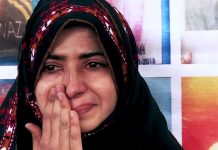
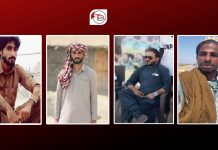
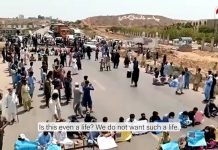
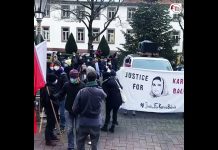
Fear is not just on the roads. It pervades homes, classrooms, and press clubs. Balochistan has become inextricably linked to the tragedy of “missing persons” — an expression so ubiquitous here that every household has heard it, though no explanation is ever given. Sons go missing from university entrances, brothers are abducted from tea shops, fathers abducted from bus stops. Some turn up after months of torture, broken in body and spirit. Others never come back at all, their names put on an endless roll borne by sorrowing mothers who sit at protest camps outside press clubs, with photographs of the disappeared in their hands.
The state labels such men “suspects” or “miscreants.” Families refer to them as students, teachers, drivers, shopkeepers. Reporters who are brave enough to tell their stories are threatened, censored, or worse — have their own names put on the roll of silence.
Journalism Under Siege
To any society, the press is the fourth pillar of the state. In Balochistan, this pillar has been intentionally broken. Telling the truth is not only hard; it is risky. A journalist in Quetta once admitted, “Here, even silence can get you killed.”
Press clubs in Gwadar, Turbat, and Khuzdar operate under close monitoring. Quetta-based newspapers are subjected to threatening phone calls telling them what news to drop, what pictures not to publish. Columns on missing persons are gingerly deleted before they get into print. Even Twitter, that once barely surviving alternative platform for those whose voices could not find space in mainstream media, has been roundly policed. Several activists and journalists have seen their Twitter accounts suspended, their electronic trails wiped out as if they never existed.
The outcome is an information vacuum. National television channels infrequently report about protests in Balochistan except when violence occurs. And while the everyday struggles of the province — no teachers, no doctors, roads closed, hospitals non-operational — infrequently travel to the mind of the rest of Pakistan.
Poverty Amidst Wealth
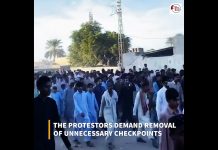
Balochistan’s paradoxes are stark. It is where the Sui gas fields power kitchens and industries throughout Pakistan, but villages in and around Sui itself use firewood because they lack access to the same gas in their ground. The Saindak and Reko Diq mines hold potential worth billions of dollars, but townspeople of Chagai still don’t have adequate schools. Gwadar is promoted as the “crown jewel” of CPEC, yet fishermen there grumble that they cannot visit the sea freely anymore due to security check-posts and alien trawlers draining local fish resources.
Unemployment is widespread. Thousands of young Balochistan graduates wander unemployed. For many, the only exit is emigration — to Karachi, to the Gulf, or over hazardous routes into Europe. Annuals are sold by families and livestock to agents who smuggle their children over Iran and Turkey. They die in deserts or in the sea off the Mediterranean coast. Their funerals, when the bodies come home, are silent condemnations of a system which offers its young nothing but failure.
The Disillusioned Youth
Balochistan’s young people are perhaps its most tragic victims — and its best hope. They learn with determination but graduate to unemployment. They desire to serve their province, but dread harassment should they challenge injustices. For them, life is a tiresome compromise: to speak or stay quiet, to remain or emigrate, to hope or lose hope.
Colleges in Balochistan are underfinanced, with fewer amenities than in Punjab or Sindh. Students tend to organize sit-ins for hostels, libraries, and scholarships. These peaceful protests sometimes are responded to with brutal crackdowns. The frustration is palpable: a whole generation that should be constructing the future of the province is instead stuck in limbo.
Women’s Invisible Struggles
Women of Balochistan have another burden to carry. They are not only denied basic healthcare and education but also muzzled in political and social arenas. Maternal deaths continue to have one of the highest rates in South Asia. Rural women may trek miles to collect water from feces-filled wells. Their strength, however, is unbreakable. In protest camps for disappeared persons, mothers and sisters sit for months, sometimes for years, under open skies, seeking answers from a state that refuses to reply.
These women are the unknown historians of Balochistan’s suffering. They remind us of the missing ones when the rest of Pakistan forgets.
A Province in Isolation
Isolation characterizes Balochistan. Geographically sprawling but administratively forsaken, it seems like a frontier that has been left to itself by its own nation. Roads are in disrepair, railways inoperative, airports scarce. Internet shutdowns are common, further isolating the province from the rest of the world. Development initiatives are launched with much pomp and show but seldom reach the locals.
The isolation is not only physical but psychological. Most Baloch believe that they are citizens without rights, seen only as subjects of suspicion. Their complaints are downplayed as “foreign propaganda,” their demands labeled as “anti-state.” This reinforces alienation and plants seeds of yet more instability.
The Way Forward
Balochistan does not require charity but justice. The very first thing that has to be done is recognizing the human price of policies of treating citizens as suspects. Enforced disappearances have to cease. An open legal system has to dominate, wherein guilt or innocence is established through courts, not unmarked cars.
The roads need to be made secure not by prohibiting night travel but making safe passage for everyone. Development schemes need to center around local jobs and community benefits instead of being extractive operations. Education needs to be extended, journalism liberated, healthcare enhanced.
Most importantly, Balochistan requires from the rest of Pakistan empathy. It needs its stories told, its hurts acknowledged, its citizens treated as equal citizens of the federation.
Conclusion: Listening Before It Is Too Late
The tragedy of Balochistan is not poverty or insecurity; it is the silence around it. Silence from policymakers, silence from national media, silence from citizens in other provinces who are not aware of the everyday struggles of their fellow Pakistanis.
But silence is not an option. A country cannot cure wounds it denies. If Pakistan wants to create a democratic, inclusive future, it has to begin by hearing out its most silenced province. The mothers camped in protest are not against the state; they are its conscience. The young people seeking employment are not insurgents; they are its future.
Balochistan has endured enough fear, enough disappearances, enough isolation. It is time for inclusion, justice, and recognition. Only then will night-time roads be safe, only then will families drive without fear, only then will the silence end.
Disclaimer: The views and opinions expressed in this article are those of the author and do not necessarily reflect the official policy or position of The Balochistan Post or any of its editors.