










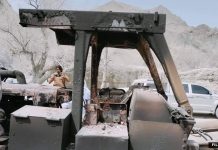

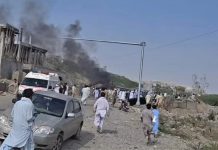
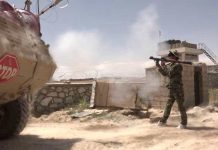
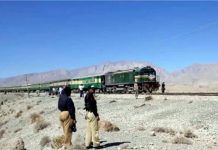
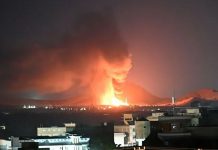







On the night of 9 July, the Balochistan Liberation Front (BLF) announced “Operation Baam,” immediately followed by a series of coordinated attacks across Balochistan. Military targets were struck in multiple districts, key highways were brought under control with snap checking, the tyres of trucks transporting minerals were burst, mobile tower equipment was destroyed, and weapons were seized from Levies and police forces. Government property was also set ablaze. According to the BLF, “Operation Baam” is the first Balochistan-wide offensive of its kind, involving more than eighty coordinated attacks of varying nature across several districts.
Prior to “Operation Baam,” the Baloch Liberation Army (BLA) had launched “Operation Herof” last year, carrying out dozens of coordinated attacks across fourteen districts. These assaults included the seizure of military weapons, control of major highways for up to 48 hours, and a large-scale ambush in Musakhel that inflicted significant casualties on the Pakistani military. Additionally, fidayeen from the Majeed Brigade captured a major Frontier Corps camp in Lasbela, engaging in intense combat for two consecutive days.
In recent years, the trend of coordinated attacks in Balochistan has grown increasingly evident. According to the Islamabad-based Pakistan Institute for Peace Studies, Baloch insurgent attacks rose by 70 percent in 2025 compared to the previous year, with Balochistan’s key highways being the most affected.
Operations such as “Baam” and “Herof” by the BLF and BLA are clear evidence that Baloch fighters now possess not only the capacity to carry out Balochistan-wide offensives, but are also operating with greater organisation, coordination, and aggressiveness than ever before.
Pakistan’s security apparatus appears increasingly unable to prevent such coordinated attacks or to effectively respond to armed blockades on key routes. The lack of timely and effective action suggests a gradual weakening of state authority in Balochistan. Baloch fighters have moved beyond traditional guerrilla tactics and are advancing towards a modernised war for independence. With evolving military strategies, they now have the capability to take control of key urban centres in Balochistan for extended periods.