
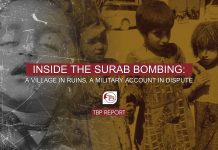
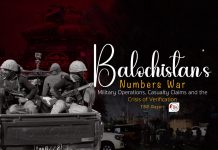










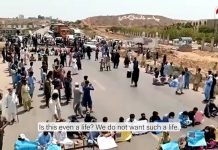


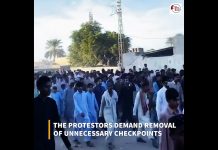


The Baloch Liberation Army (BLA) has claimed responsibility for taking control of Surab city in Balochistan’s Kalat division, in what appears to be a continuation of its campaign to seize territory across Balochistan.
In a statement released on Friday, BLA spokesperson Jeeyand Baloch said the group’s fighters had “seized full control” of Surab, disarming security personnel and capturing key government installations, including a bank, the Levies station, and the police station. The BLA said a detailed statement would be issued to the media soon.
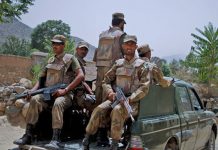
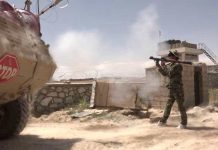
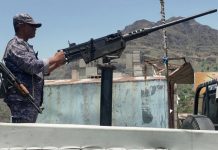
According to local sources and eyewitnesses, hundreds of armed fighters stormed Surab, seizing the Levies and police stations, banks, and multiple government offices. Security personnel present at these sites were reportedly disarmed, and several officers are believed to have been detained by the group.
Reports indicate that multiple government vehicles were set on fire during the assault.
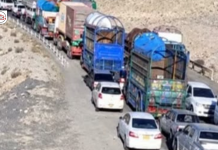
The armed group has also established checkpoints on major roads, including the Quetta–Karachi highway and the Surab–Gidar route, effectively cutting off access to the city and surrounding areas.
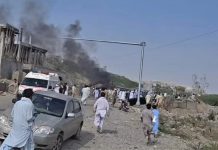
Video footage from the scene shows smoke billowing from the Levies station, where BLA fighters set the building on fire after taking control.
Pakistani authorities have not yet issued a response to the BLA’s claims.
The Baloch Liberation Army is one of the most active armed groups in Balochistan. It has claimed responsibility for attacks on security forces, infrastructure, and state-backed entities, and has been engaged in an armed insurgency seeking independence for Balochistan for over two decades.
The increasing number of such incidents in Balochistan suggests a shift in the balance of power in the region. While Pakistan’s military has long claimed control over Balochistan, the frequency and scale of recent operations by the Baloch Liberation Army indicate a growing capability among Baloch armed groups.
Analysts say the state’s counterinsurgency strategies are failing to curb the insurgency, and instead, the freedom movement appears to be gaining momentum, challenging Pakistan’s authority in the region.